
August 3, 2026
CORZ Is Down 32%. The $24B Backlog Hasn’t Moved.
A full trading plan for the AI infrastructure reset happening right now.
First a note from Base Camp Trading
Hi Friend,
Just wanted to let you know you can now get a free copy of my new strategy guide here:
How to Master the Retirement Trade [PDF]

What’s the Retirement Trade?
It’s a simple trading opportunity that appears almost every trading day, between 9:30 and 10:45 am EST where traders are making between $300-$1,100+ per contract.
One of my favorite parts about this trade is how predictable it is. It occurs about 3-5 times each week. And once you know what you’re looking for, and how to enter/exit the trade, this could become another nice stream of income for you.
I’m not sure how long I’ll leave this guide up for. So do yourself a favor and take 5 seconds to download it now. At least you’ll have a copy stored for future use!
>> Click Here to Download Your FREE Strategy Guide Now.
To your success,
Dave Aquino
Partner, Head of Options Trading
Base Camp Trading
Market Overview
The broad market is holding up better than the headlines suggest. The S&P 500 closed July at 7,489, up roughly 19% year over year, sitting just below its 52-week high of 7,620. The Dow finished July near 52,485. The Nasdaq Composite closed at 25,373. The Russell 2000 came in at 2,931, slightly softer on the session, underperforming large caps as it often does when rate pressure builds.
The VIX closed July at 15.99, down more than 6% on the final session. That is not a fear reading. That is a complacency reading, and it matters for position sizing. When the VIX is sub-16, options premiums are relatively compressed across the broad market, which makes single-name elevated-IV situations like CORZ stand out even more by comparison.
The fixed income backdrop is the tension underneath all of this. The 30-year Treasury yield has pushed to 5.275%, a significant move higher over the past month. That creates real competition for capital and applies pressure specifically to high-growth, cash-burning names. It is not a coincidence that the AI infrastructure cohort, which is uniformly in heavy construction and free cash flow negative, has sold off 30 to 40% from peak even as the underlying contracts and hyperscaler demand have not changed. Rising long rates are doing the valuation work that the contract announcements initially reversed.
On the commodity side: crude oil has been volatile, with WTI sitting near $79 to $85 depending on the session. Gold is trading near $4,107, held back by the yield surge. The dollar is firm. The macro picture favors selectivity over broad exposure right now. Risk-on is alive in mega-cap tech. It is under pressure in high-beta growth names. That split defines the opportunity set this week.
The single most important macro data point from last week: Amazon reported Q2 2026 results with AWS growing 36.7% year over year, its fastest pace in 18 quarters, and lifted full-year capital expenditure guidance to approximately $220 billion. Alphabet reported Google Cloud revenue growth of 82% in Q2 to $24.8 billion. Microsoft Azure grew 43%. Every major hyperscaler is accelerating AI infrastructure spending. That is the demand backdrop behind every AI data center trade on the board right now.
The Biggest Opportunity: CORZ
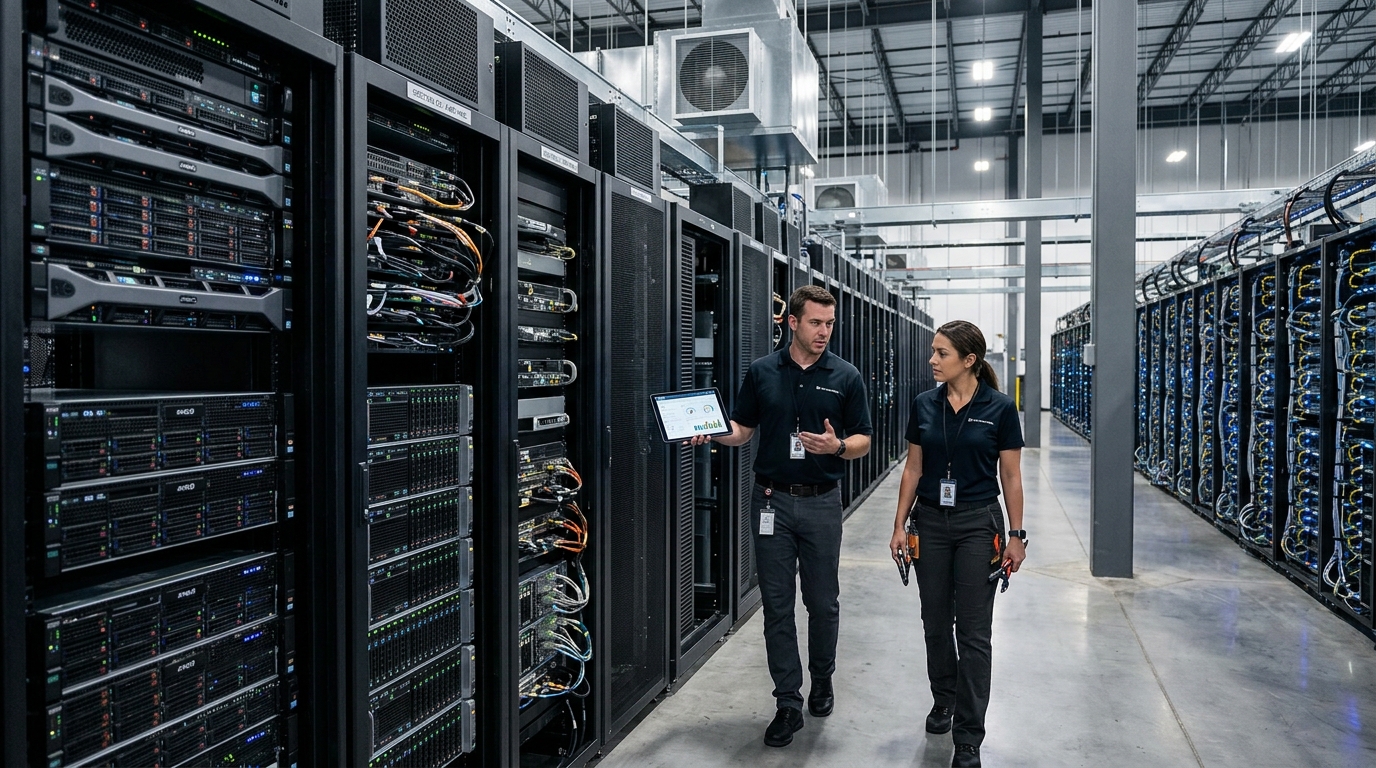
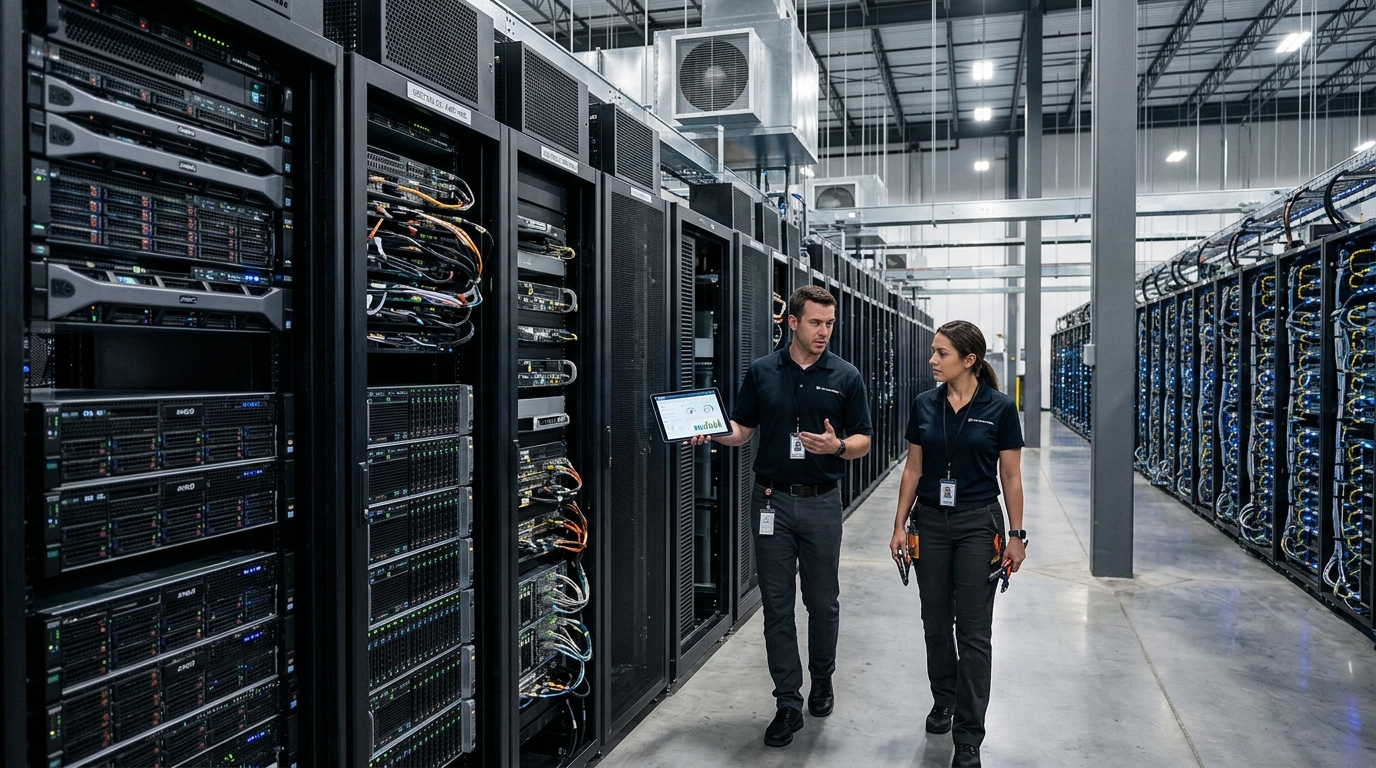
Core Scientific (NASDAQ: CORZ) is the highest-conviction idea in this report today. Here is why it stands out from everything else in the AI infrastructure cohort.
On July 28, the company reported Q2 2026 revenue of $164.2 million, beating the analyst consensus of approximately $144.83 million by $19 million. That was a 109% revenue increase year over year. Colocation revenue, the AI data center business, came in at $136.7 million for the quarter, up from $10.6 million in Q2 2025. That is a 1,190% increase in a single year from the division that now runs the company. Adjusted EBITDA reached $41.1 million, up from $28.5 million in the same quarter last year. The company ended Q2 with $1.8 billion in liquidity.
The same day, Core Scientific announced a 15-year agreement with AMD covering 530 megawatts of AI data center capacity across five U.S. sites, generating more than $14 billion in base contracted revenue with 2.5% annual escalators. AMD also received warrants to purchase up to 30 million CORZ shares at $23.47. The option clause matters: AMD secured the right to reserve up to an additional 1,925 megawatts through December 2028, which could push the total partnership toward 2.5 gigawatts. Combined with the existing CoreWeave contract covering roughly 590 megawatts, total contracted customer power capacity has reached 1.1 gigawatts, representing over $24 billion in base contracted revenue.
The stock fell anyway. CORZ closed near $20.72 after reporting, down roughly 32% from its 52-week high of $30.46. The GAAP net loss for Q2 was approximately $1.2 billion, almost entirely driven by warrant fair value changes and a $266.5 million mining asset impairment. Neither of those is a cash event. The colocation margin is running at 59%. The business is growing adjusted EBITDA with revenue more than doubling year over year. The GAAP loss is an accounting artifact of the transition out of a legacy mining business, not a signal about the operating health of what this company has become.
At roughly $20 to $21, Core Scientific carries a market cap near $6.6 to $6.8 billion against $24 billion-plus in base contracted backlog. The street consensus sits around $29 to $33, with targets from Needham at $35, Canaccord at $36, Freedom Capital at $33 with a Strong Buy rating, and the average Wall Street 12-month target near $33.25. That implies roughly 40 to 60% upside from current levels based on analyst models.
What is interesting is that the market is still pricing CORZ as if it is a Bitcoin miner. By mid-July 2026, 437 megawatts of billable colocation capacity were online. For the first half of 2026, 77% of total revenue came from colocation. Bitcoin self-mining has been reduced to two sites and is expected to conclude entirely by year-end 2026. The company management has explicitly stated their objective is to maximize value by converting power capacity into long-term contracted AI colocation revenue streams. The pivot is not pending. It is largely done.
Slight tangent, but it matters for understanding the AMD deal specifically. AMD needed physical infrastructure: grid-connected land with substations already tied to the utility system and fiber already in the ground. That is not something you replicate quickly. Morgan Stanley’s research flagged the problem: U.S. data centers will need 68 gigawatts of power between 2026 and 2028. Projects under construction account for roughly 15 gigawatts and available utility capacity covers another 15 gigawatts. That leaves a potential 38-gigawatt shortfall. Grid interconnection queues stretch five to seven years in some regions. Bitcoin mining companies control nearly 20 gigawatts across large grid-connected sites. Repurposing those connections can deliver power one to three years faster than waiting for new utility buildout. Core Scientific had the land, the grid access, and the development track record. That is the structural reason the AMD deal exists here and not somewhere else.
Technical Picture
CORZ has a beta of 5.50. That is the first technical fact worth understanding, because it shapes everything else. The 52-week range runs from $12.42 to $30.46. The stock is currently trading in the $20 to $22 zone, well below its June 18 all-time closing high of $29.16 and roughly 30% off the peak.
The post-earnings range of roughly $20.72 to $23.00 represents a consolidation zone. The stock saw a day range of $20.67 to $23.00 in the sessions following the AMD announcement. Volume on the July 28 earnings day was elevated. The stock bounced from the $20 area on July 20 alongside the broader AI infrastructure sector rebound, when CORZ gained 7% to $22.31 alongside HUT, IREN, WULF, and APLD. That bounce came off a near-term technical oversold condition, with the broader cohort having sold off 26 to 43% in the month preceding that session.
Key levels to monitor: support near $18 to $19 represents the lower bound of where risk-reward begins to deteriorate for long entries. The $23 to $24 zone is the first resistance level that aligns with the AMD warrant strike of $23.47. A clean hold above $22 with volume confirmation would be constructive. The $28 to $30 zone represents the area where analyst consensus targets cluster and where the stock traded before the sector-wide AI infrastructure correction took hold.
The 5.50 beta means trend confirmation matters more than entry precision. A position entered at $21 versus $22 is far less consequential than whether the stock is moving in the right direction with volume. Watch for a close above $23.50 with above-average volume as the first meaningful technical signal that the AMD deal is beginning to get properly discounted.
SpaceX Targets Wireless, Mode Targets Earnings
SpaceX just put Big Telecom on notice, telling investors its plans to launch a U.S. mobile service for consumers. For most investors, that sounds like a shakeup for the $1.6T telecom industry.
For Mode Mobile, it could mean more revenue.
More connected phones could mean more places for EarnOS, the platform that turns everyday smartphone activity into earning potential.
Mode already reaches 490M+ users, helped users earn and save $1B+, and generated $115M+ in cumulative revenue. With $MODE secured, investors can still access pre-IPO shares at $0.52/share, plus up to 20% bonus shares.
Get the details before this window closes.
Please read the offering circular at invest.modemobile.com. This is a paid advertisement for Mode Mobile’s Regulation A Offering.
Sector Rotation: Where Institutional Capital Is Moving
The AI infrastructure trade is at an inflection point right now, and the internal divergence is worth mapping carefully.
At the hyperscaler level, money is flowing in decisively. Amazon jumped 15.3% on July 31 after the AWS Q2 beat. Alphabet gained 6.9% on its own results. Microsoft added 3% on Azure’s 43% growth. This is the demand layer of the AI infrastructure trade, and it is accelerating. Hyperscaler capex is now projected near $700 billion in 2026, with the majority tied directly to AI infrastructure. That spending has to land somewhere physically. It has to land on land, power, cooling, and fiber.
One level down, in the former-miner-turned-AI-infrastructure cohort, the picture is messier. IREN, TeraWulf, and Applied Digital were all down more than 30% over the trailing month into late July. IREN stock fell 33%, TeraWulf shares dropped 38%, and Applied Digital was off 36% over that stretch. The Global X Data Center and Digital Infrastructure ETF (DTCR) held up better, down only 13% over the same period. That gap between the ETF and the individual names tells the story: diversified data center REITs and established operators are holding value better than the high-beta transition names.
The rotation pattern suggests institutional money is not abandoning AI infrastructure. It is tightening its criteria. Capital is moving toward names with actual billing revenue, signed contracts with investment-grade counterparties, and a visible path to positive free cash flow. That framework puts Core Scientific ahead of most of its peers in the transition cohort, given that 437 megawatts of CoreWeave capacity is already generating real revenue while the AMD build is still in the financing and construction phase.
The institutional signal to watch: CoreWeave itself currently leads aggregate institutional order flow scores in the AI infrastructure space, according to Benzinga data, with strong momentum and significant institutional participation. CoreWeave being the dominant colocation customer of CORZ is both a risk and a signal of where the smart money is concentrated. That relationship is worth monitoring in both directions.
Stocks on the Radar
HUT (Hut 8 Corp.) Q2 2026 earnings are scheduled for August 4 before the open, and management has flagged the results may appear messy on mark-to-market accounting. On July 20, Hut 8 signed a $9.8 billion, 15-year lease for the second phase of its Beacon Point AI data center campus in Texas, sending shares up as much as 17%. The same structure that created the CORZ GAAP confusion is likely to appear in HUT’s Q2 results. Traders who understand the accounting artifact dynamic have a potential edge on the post-earnings reaction. Watch whether the stock holds the July 20 breakout level into and through the report.
IREN (IREN Ltd.) Added $2.8 billion in new multiyear cloud services contracts with AI developers on July 20, surging 19% on that session. IREN carries a beta of 4.28 and had fallen 33% in the month leading into that bounce. The company has raised its year-end AI Cloud annualized run-rate revenue target to more than $4 billion, with roughly 85% of that revenue now under contract. IREN also has a $3.4 billion, five-year contract with NVIDIA for Blackwell GPU deployment at its Childress, Texas campus. This is a high-conviction AI infrastructure transition name with more GPU-centric exposure than CORZ. The risk: it remains mid-transition with execution risk on multiple simultaneous construction and deployment timelines.
WULF (TeraWulf Inc.) Led the July sector rebound with a 12% gain, anchored by a 20-year, $19 billion Anthropic data center lease. The stock was up 99% year to date at that point, even after a 38% pullback from peak. WULF carries a beta of 4.26. Cipher Mining (CIFR) also gained 11% on the sector bounce day, with 700 megawatts of contracted HPC capacity and anchor leases with Google and AWS. These names function as leveraged plays on the same AI power infrastructure thesis as CORZ but with less revenue currently in the billing stage.
Amazon (AMZN) Jumped 15.3% on July 31 following Q2 results that showed AWS growing 36.7% year over year, its fastest pace in 18 quarters, with revenue of $42.23 billion against a $40.54 billion estimate. Operating income of $27.5 billion was up 43%. Management lifted full-year capex guidance to approximately $220 billion, primarily for AI and cloud infrastructure. The AWS backlog reached $496 billion. This is the demand anchor of the entire AI infrastructure theme. A stock that moves 15% in a session on cloud results is telling you something important about where institutional conviction sits in the broader AI spending cycle.
You’re Being LIED To About The Iran War
Forget EVERYTHING you’ve heard about the Iran war.
Especially the reasons why we’re bombing the country.
Risk Dashboard
- 30-Year Treasury yield at 5.275%. This is the primary macro headwind for every cash-burning AI infrastructure name, including CORZ. Rising long rates compress valuations on distant cash flows. If yields push toward 5.50%, expect continued pressure across the high-beta AI infrastructure cohort regardless of contract activity.
- HUT Q2 2026 earnings on August 4. This is the next hard catalyst in the AI infrastructure space. If Hut 8’s results are poorly received because of GAAP mark-to-market confusion, it could create sympathy selling in CORZ, IREN, WULF, and CIFR. If HUT executes and the post-earnings reaction is constructive, it could accelerate the broader sector recovery.
- CORZ customer concentration risk. CoreWeave currently represents the dominant share of colocation revenue. Any public signals about CoreWeave’s financial health, capital commitments, or operational delays would move CORZ materially before AMD capacity comes online in H1 2027. Watch 8-K filings and investor conference commentary for any change in relationship tone.
- AMD build-out financing. Management guided toward project-level bonds to fund the roughly $6 billion AMD construction program, protecting equity from dilution. If credit conditions tighten or bond terms deteriorate, the capital structure and equity dilution risk change. Watch investment-grade credit spreads in the data center infrastructure space as a leading indicator.
- Apple earnings and forward guidance. Apple fell 7.13% on July 31 in a session where the broader market rallied. If consumer-facing tech disappoints on forward guidance, it can trigger rotation out of large-cap tech that initially spills into high-beta growth names as investors de-risk overall. Watch AAPL guidance closely for any signal that consumer AI spending is softening.
- Crude oil volatility. WTI has been running in the $79 to $85 range with sharp session moves. AI data centers are energy-intensive operations. Sustained crude price increases flow through to power costs for every company in this space. Energy cost is not existential for names with long-term fixed-price contracts, but it affects margin expansion timelines.
Trader’s Action Plan
Here is where I am at heading into this week.
The highest-conviction opportunity in this report is CORZ. The core thesis is a valuation gap: a $6.6 to $6.8 billion market cap against $24 billion-plus in base contracted backlog, with 437 megawatts already billing at 59% colocation margins, a 15-year AMD deal that AMD itself described as its single largest infrastructure commitment, and self-mining wind-down on track for year-end 2026. The analyst consensus is $29 to $36. The stock is at $21.
The highest-conviction condition to watch for: a close above $23.50 with above-average volume following HUT’s August 4 earnings. If the sector re-rates on a clean HUT report, CORZ is likely the cleanest-executing name in the group and should lead the move. A third anchor customer announcement would be a separate, independent catalyst that resets the customer concentration conversation entirely.
The conditions that would weaken the thesis: yield continuation above 5.5% on the 30-year, CoreWeave-related news, or a post-HUT-earnings sector selloff that breaks CORZ below $18. Below $18, the construction-phase free cash flow burn and $3.3 billion in senior secured notes become the dominant pricing factor rather than the contracted backlog.
For the broader market: the VIX at sub-16 and the S&P 500 within 2% of all-time highs tells you the macro backdrop is not in emergency mode. The AI infrastructure reset happening in the high-beta transition names is sector-specific, driven by rising rates and capex fatigue concerns, not by any sign that hyperscaler demand is slowing. Amazon, Alphabet, and Microsoft all confirmed that demand is accelerating, not decelerating. The infrastructure names are selling off because investors are reassessing the timing and financing cost of the buildout, not the ultimate destination.
What deserves the closest attention this week: HUT earnings on August 4, CORZ price action at the $23.47 AMD warrant level, and the 30-year yield. Those three things will tell you more about near-term direction in this trade than anything else. The broader market backdrop is fine. The opportunity is in understanding why a company with $24 billion in contracted revenue is trading at a $6.8 billion market cap, and whether this week’s catalysts begin to close that gap.