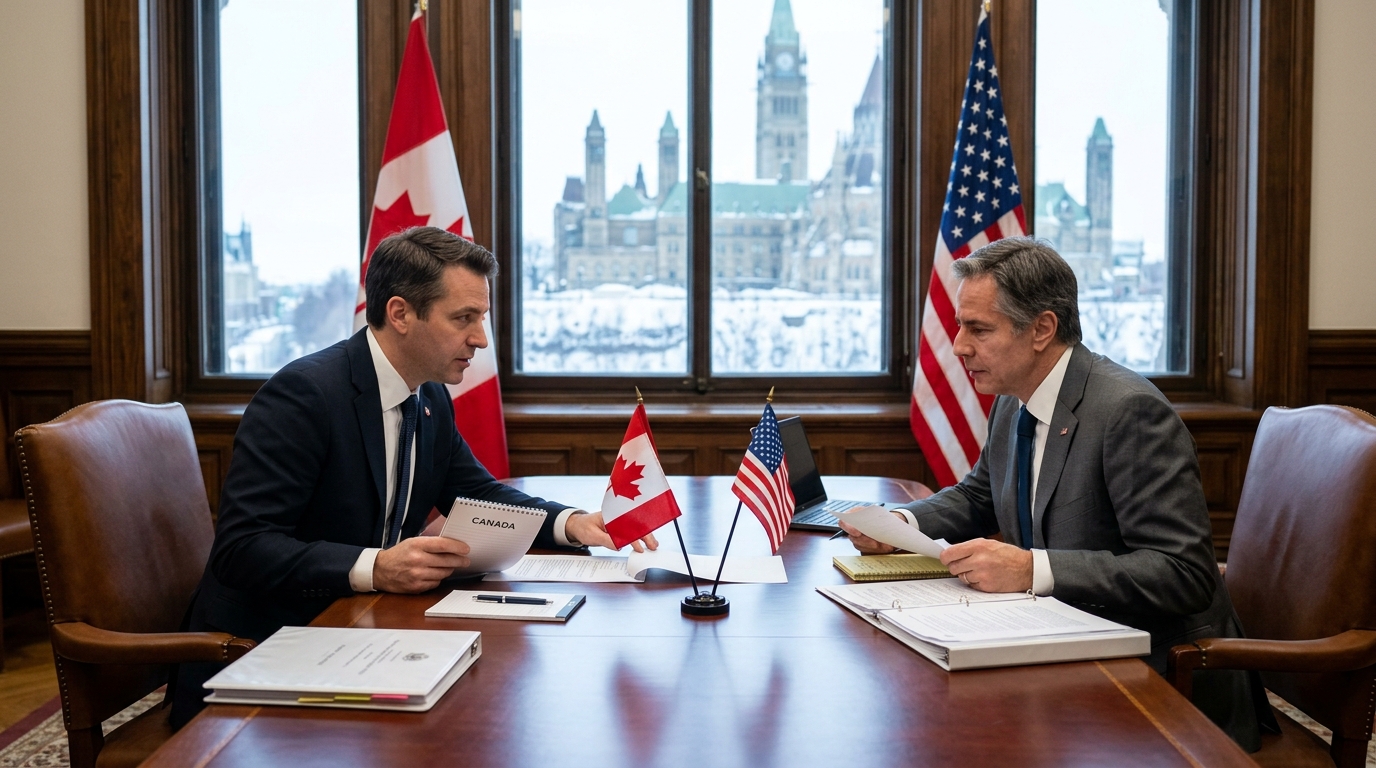
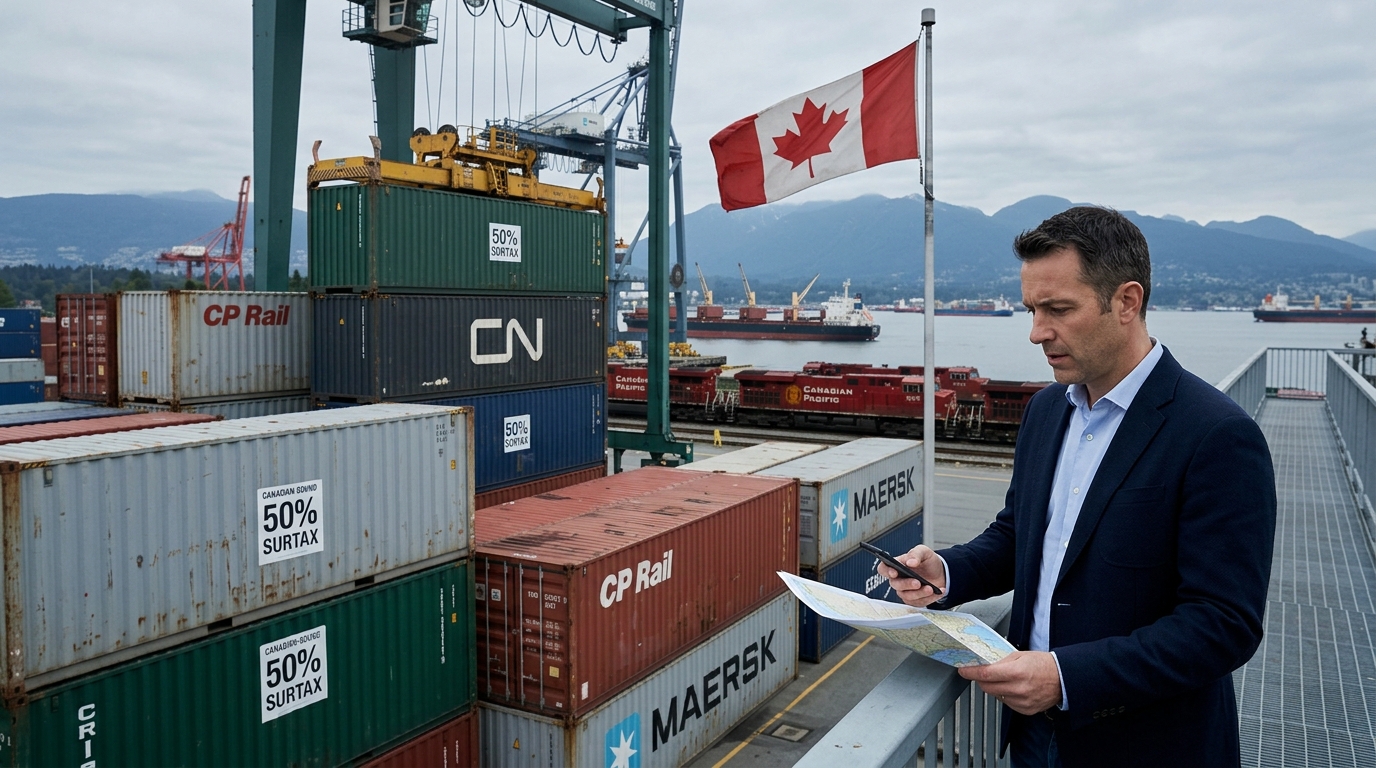
The holiday is over. Canada’s countermeasures take effect at 12:01 a.m. on September 8, 2026, and the first trade of Tuesday morning will already carry the cost. The question is not whether sectors move. It is which direction, and how fast.
What Ottawa Actually Did
Canada is imposing 15%, 25%, and 50% counter-tariffs (a surtax) on U.S.-origin goods, in a dollar-for-dollar, rate-for-rate response to U.S. Section 338 tariffs. The product list is drawn from items targeted by the U.S. Section 338 action and U.S. Section 232 sectoral tariffs. The measures cover about C$27.6 billion of imports and span more than 700 tariff items across sectors including steel and aluminum, dairy, appliances, agricultural equipment, pulp and paper, electronics, furniture, and apparel.
The 50% duties apply to U.S. steel and aluminum products that previously carried a 25% Canadian counter-tariff, and also hit categories including furniture and clothing and apparel. The 25% tier includes appliances, dairy products (including cheese), fish and seafood, and certain steel and aluminum derivative products. The 15% tier includes a smaller list of items such as hand tools and some industrial equipment. Talks collapsed on August 21, 2026. Prime Minister Mark Carney has made clear Washington must get serious before Ottawa moves. Details on the C$1.5 billion Regional Tariff Response Initiative expansion are also expected September 8.
The Steel Trade: Own the Domestic Producers
The 50% tariff on U.S. steel and aluminum entering Canada is the most direct market signal in this package, and U.S. electric arc furnace mills are the structural beneficiaries. When U.S. exports into Canada get priced out, domestic producers may keep more tons at home, tightening the U.S. market and supporting spreads.
Steel Dynamics benefits directly if trade friction keeps U.S. steel prices supported. STLD also has a cleaner growth mix, with strong second-quarter 2026 results and demand tailwinds tied to data centers, infrastructure spending, and reshoring that can offset tariff-driven volatility. Nucor carries similar positioning. Nucor entered 2026 with historic order backlogs, up nearly 40% year-over-year in the steel mills segment and 15% in steel products. Both names belong on the buy side of Tuesday’s open.
Cleveland-Cliffs is the more complicated call. CLF is a major supplier of flat-rolled steel to the domestic automotive industry and is vertically integrated across iron ore and blast furnace steelmaking, but its performance has lagged EAF peers due to heavier auto exposure and higher leverage. Tariff protection helps on pricing but does nothing for auto demand. Treat CLF as a secondary position rather than a lead.
Industrials and Appliances: The Avoid Side
Agricultural equipment is included in the targeted sectors, with many affected items falling into the 25% and 50% tiers depending on the specific tariff line. Deere has guided to about $1.2 billion of total tariff costs in fiscal 2026 on a pre-tax basis. Canada is one of Deere’s most significant markets, and added tariffs on U.S.-origin shipments compound a headwind already embedded in guidance. Caterpillar faces parallel exposure across equipment lines that move north.
Whirlpool is in the 25% appliance bracket. The Canadian market accounts for a meaningful portion of North American revenue, and with domestic alternatives explicitly prioritized by Ottawa’s product selection, volume loss could be structural rather than temporary. Avoid WHR until the first post-tariff shipment data clarifies the demand hit.
Paper and Packaging: Watch IP and WY
Pulp and paper are named explicitly in Ottawa’s target sectors. The new targeted counter-tariffs are concentrated in sectors such as steel and aluminum, dairy, appliances, agricultural equipment, pulp and paper, plastics, and electronics. International Paper and Weyerhaeuser both have cross-border exposure that can face incremental friction when tariffs and compliance costs rise. Neither collapses on this alone, but neither is a Tuesday morning buy either.
The Risk That Cuts Both Ways
The bull case for NUE and STLD depends on trade friction supporting domestic pricing power. That thesis breaks if Washington and Ottawa resume talks and pull rates back. Jefferies cut its outlook for the U.S. steel sector after media reports of a tentative trade agreement that would reduce tariffs on certain steel and aluminum imports to 25% from 50%. That deal fell apart, but the market reaction showed how fast the trade can unwind. Size positions accordingly.
Action Plan
Tuesday’s open favors NUE and STLD on the long side, where trade friction can help keep domestic pricing power intact and widen spreads. Fade DE, CAT, and WHR on any gap-up open. Monitor the C$1.5 billion regional support announcement due Tuesday for any softening signals that could hint at resumed diplomacy, which remains the single biggest risk to the metals trade.