By David Shepardson
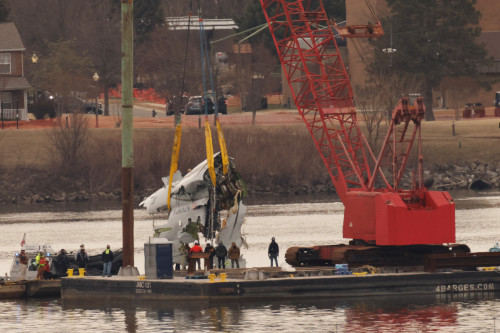
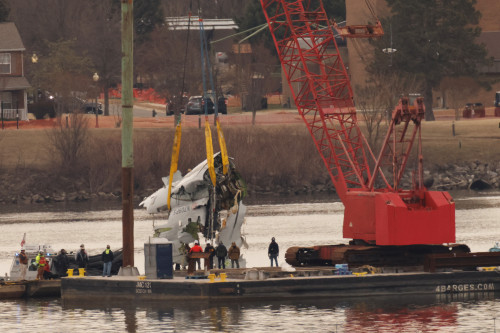
WASHINGTON, March 26 (Reuters) – Two U.S. House committees unanimously voted to pass sweeping aviation safety reform legislation to address dozens of recommendations issued after a January 2025 collision between an American Airlines regional jet and a U.S. Army Black Hawk helicopter that killed 67 people.
The House Armed Services Committee voted 53-0 to require the installation of collision prevention technologies on all military aircraft by 2031, except fighters, bombers and drones.
The House Transportation and Infrastructure Committee separately voted 62-0 to establish requirements for equipping collision mitigation technologies for airplanes and helicopters. The legislation addresses deficiencies in the Federal Aviation Administration’s safety culture, enhances air traffic control training and procedures, and strengthens the safety of airspace around Reagan Washington National Airport, where the fatal collision occurred.
The National Transportation Safety Board said the safety legislation, called the ALERT Act, meets its 50 recommendations proposed after the mid-air collision. NTSB Chair Jennifer Homendy called the action historic, saying it was the first time committees in Congress had approved legislation that addresses all of the board’s recommendations following a major aviation disaster.
The bill would also require the use of a safety system known as ADS-B by the end of 2031. The bill includes a review of flight frequency at Reagan National – which has the nation’s single busiest runway – to determine if it can handle current traffic.
The U.S. House failed to pass a separate aviation bill last month after the Pentagon withdrew its support and despite pleas from lawmakers and relatives of those killed in the American Airlines collision, the worst U.S. aviation disaster since 2001.
The ROTOR Act had been passed unanimously by the U.S. Senate in December. But under fast-track rules designed to expedite legislation, the bill needed a two-thirds majority in the House to pass, and it fell one vote short.
If the House passes the ALERT Act, the House and Senate would likely meet to work out differences between the two bills before any measure could become law.
(Reporting by David Shepardson, Editing by Franklin Paul, Rod Nickel)