Most traders have never noticed the weird market anomaly that happens at 9:35 AM every morning.
They’re too busy with lagging indicators trying to predict the next move… when the market makers have already set the tone for the trading day.
It’s this weird anomaly that points us to the market maker’s key levels above and below.
And by playing the move within that range…
Regular folks like you have been able to reach for $100 or more (on a $1K stake) over 600 times in the last 2 years.
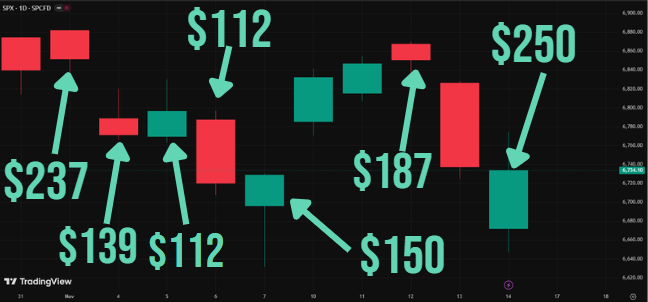
We’ve seen this straightforward approach play out whether the market broke out… broke down… or stayed choppy.
Granted, I can’t make trading guarantees here.
But I’ve opened up the data behind those trades, as well as how you can get in on the very next morning opportunity.
You’ll find the full details right here.
See you in the market.
Chris Pulver
GE Vernova’s $176B Backlog Is the Trade
The surface-level read on GE Vernova right now is a stock that has lost altitude. GEV hit an all-time closing high of $1,174.86 on June 30, 2026. It trades near $883 as of September 15, 2026, roughly 25% below that mark. That pullback has produced something unusual: S&P Global data compiled by Stock Analysis shows consensus at 37 analysts with an average price target of $1,236. Analysts spent a year chasing the price higher. The correction finally let their targets get ahead of the trade.
The more important question is whether the underlying business justifies the gap, and on that count, the numbers are difficult to argue with. In its July 22, 2026 second-quarter results release, GE Vernova reported total backlog of $176 billion and raised 2026 free cash flow guidance to $11.5 billion to $12.5 billion, from $6.5 billion to $7.5 billion. That guidance revision alone reframes the valuation math considerably.
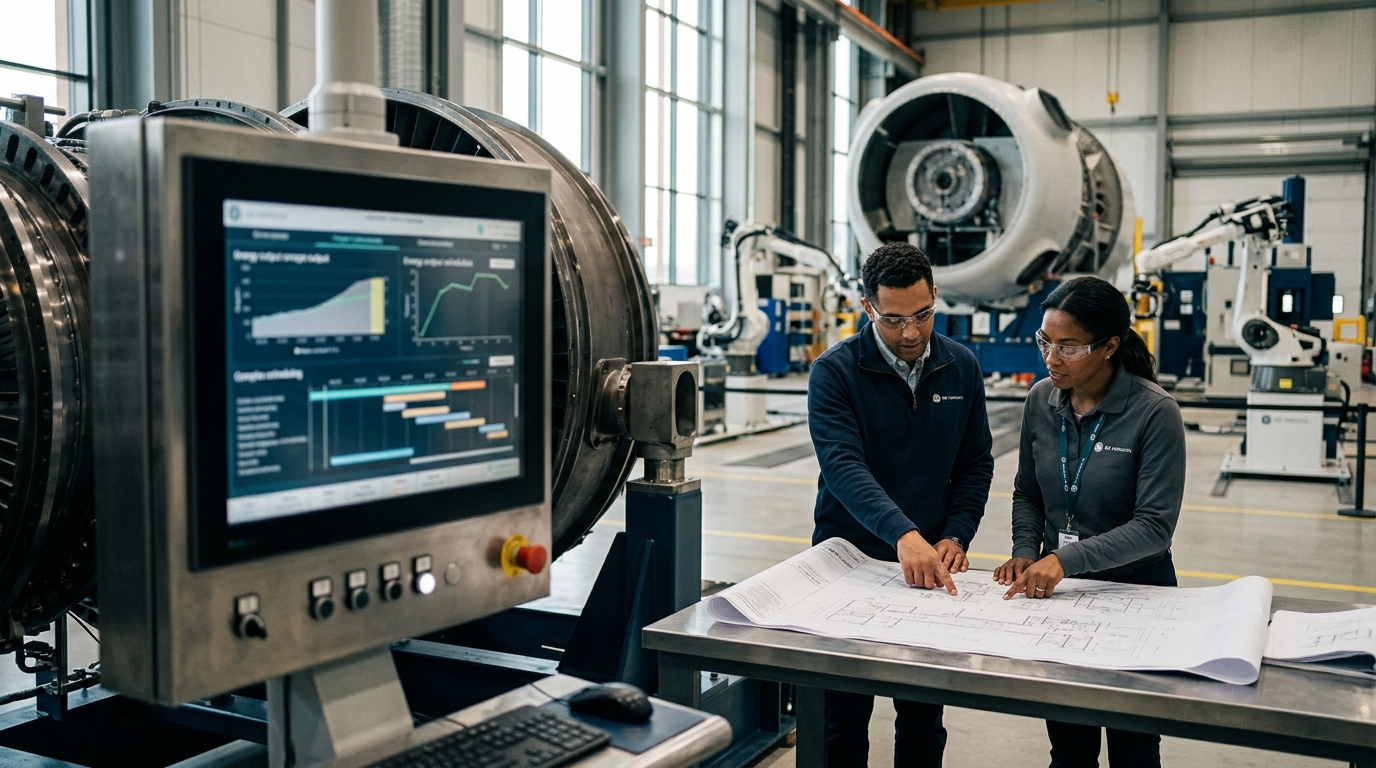
GE Vernova’s Power segment orders jumped 134% organically in Q2 2026 as gas turbine backlog reached 116 GW. Management targets at least 125 GW under contract by year-end, and the company remains on track to deliver a 20 GW annual gas turbine output rate in Q3, scaling to 24 GW in 2028 and 30 GW in 2030. To meet that output, roughly 325 new machines had been installed across GE Vernova’s gas turbine factories by mid-year, with that figure expected to reach about 400 by year-end.
The electrification segment is where the AI infrastructure angle becomes concrete. Electrification orders rose 66% organically to $6.3 billion, with data center orders alone topping $5 billion year-to-date, more than double all of 2025. GE Vernova has said it captures roughly $300 million in revenue per gigawatt of data center capacity it serves, and management has said that figure could grow two to three times as newer grid products, including solid-state transformers and medium-voltage UPS blocks, approach commercialization. That product pipeline is the earnings multiplier most bulls haven’t fully priced.
The bear case deserves a hearing. GE Vernova’s stock fell about 8.6% on September 14, 2026 after GLJ Research initiated coverage with a Sell rating and a $470 price target, the lowest on Wall Street. GLJ’s argument centers on cyclicality: gas turbine demand historically moves in waves, and the current order surge may pull forward demand that leaves a trough later. Management has emphasized that a larger services component in its backlog supports longer-duration earnings, because today’s equipment sales create recurring service revenue for years. That services floor is the structural difference between this cycle and prior ones.
GE Vernova’s results come as global power demand rises from data centers, grid upgrades, and electrification. The company has described itself as operating in the early stage of a multi-decade electricity investment cycle. Whether that framing proves accurate determines whether the current pullback is noise or an exit signal. At roughly $883 with $176 billion of contracted work, the setup favors the former.
Watch the Q3 earnings report for backlog conversion pace and services margin progression. Those two data points will tell traders whether the stock is building toward a re-test of the June highs or settling into a lower range while the business catches up to its order book.