
As copper breaks records… capital is turning toward early-stage discovery stories that are only beginning to unfold.
One under-the-radar Canadian copper company – still trading undiscovered below $2 per share – is emerging at exactly the right moment.
The company controls a historic copper belt in Canada’s Yukon that produced for decades… and is now being explored as a unified system for the first time.
And the results are starting to speak for themselves:
- High-grade copper confirmed at the flagship
- Past-producing areas getting a fresh look via the drill bit
- Multiple additional targets advancing toward drilling
Multiple rigs are already operating. More are being added. And the company is fully funded through the end of 2027 for its biggest exploration program yet.
More rigs. More drilling. Multiple shots at discovery – from a copper stock still trading below $2.
We’ve compiled a FREE online report detailing the high-grade results, the district-scale opportunity, and where the 2026-27 drill campaign goes next – including our exclusive interview with the company’s CEO.
Click here for instant access – and get the full story before the next round of drill results arrives.
Brent’s $102 Price Tag Is Starting to Crack. Who Loses First.
The crude market charged investors a war premium for seven months. That invoice is now being revised.
Brent settled Tuesday at $102.59, down 2.6%, while WTI dropped 3.5% to $89.38, the steepest single-session decline in more than a week. Crude exports from the Middle East have rebounded to 17.5 million barrels a day, or 98% of pre-war levels, according to JPMorgan analysts led by Natasha Kaneva. Saudi Arabia has restored about half the flows through its cross-country pipeline bypassing Hormuz, after drone strikes halted the key route earlier this month, with East-West flows reaching at least 3.5 million barrels a day. Brent extended that loss overnight and was trading near $97 Wednesday morning.
The diplomatic backdrop remains binary. Iranian Foreign Minister Abbas Araghchi said he expects a formal U.S. response to Tehran’s latest proposal for a ceasefire and the phased reopening of Hormuz, while Trump insisted he has offered “nothing” and rejected reports of sanctions concessions. Iran’s proposal calls for a seven-day timeline for reopening the strait that would begin once the U.S. accepts the plan, and it is tied to conditions referenced in the June memorandum that later collapsed. Even so, the market has started pricing in normalization, and that has consequences across three distinct groups.
The Groups That Gave Back Most
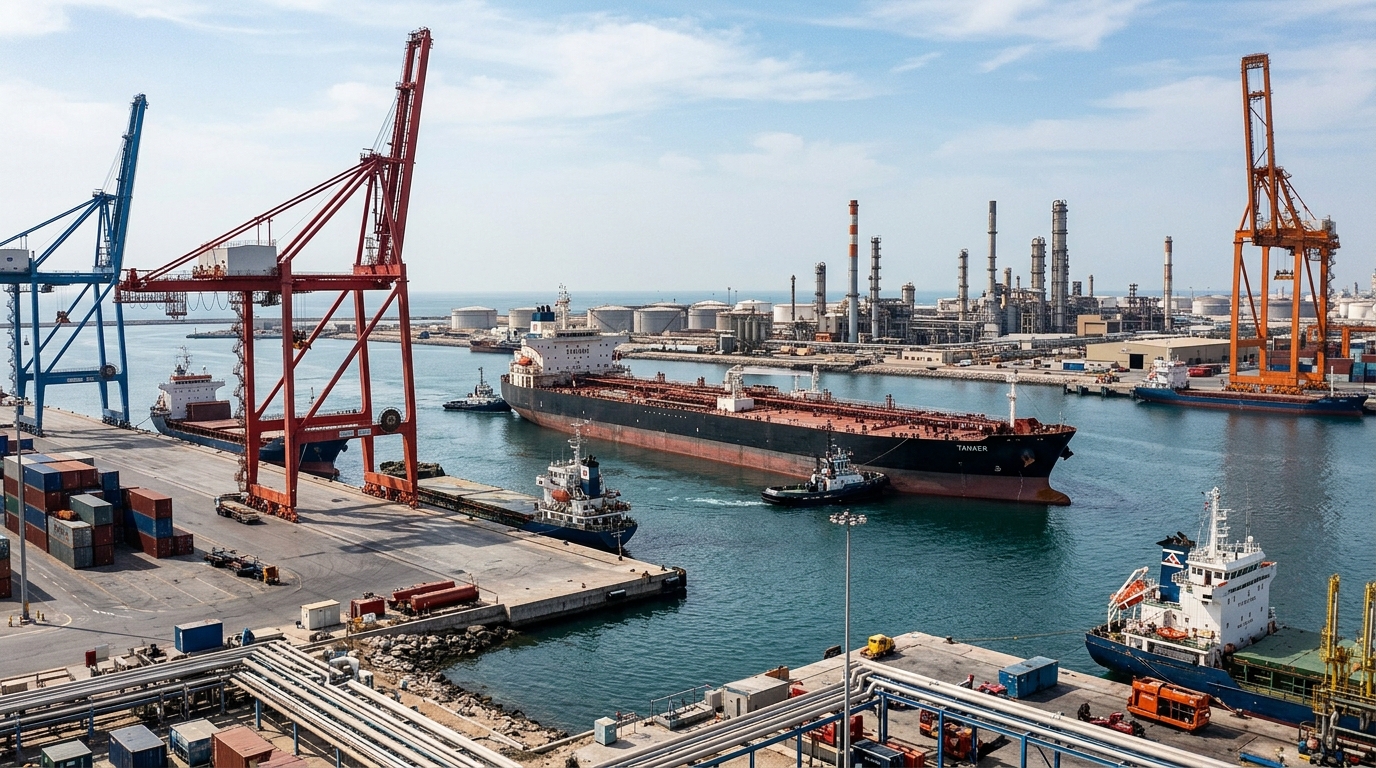
Tankers. FRO and DHT have been the year’s most spectacular beneficiaries of the war. Disrupted trade routes near Iran and Hormuz pushed shipping companies to travel longer routes and charge higher rates. Headlines around the seven-day Hormuz timeline have already pressured tanker stocks at points, even as VLCC daily charter rates moved past $1 million per day earlier this month. Tanker rates are inherently cyclical and geopolitical premiums can fade quickly if tensions ease. Any sustained export recovery through the pipeline route reduces the ton-mile demand that justified elevated rates. Watch FRO and DHT for accelerating distribution from institutional holders who rode the wave up.
Refiners. Valero (VLO) sits in an unusual position. VLO posted Q2 2026 adjusted EPS of $12.54, up about 450% year-over-year. A ceasefire in the Gulf that actually holds could push crack spreads lower, and take the refiners with it. Valero’s earnings equation is different from integrated majors: what matters is the spread between crude input costs and refined product prices, not the absolute level of oil. Falling crude without a corresponding drop in product prices would actually widen margins. The more dangerous scenario for VLO is a full normalization, crude falls and product oversupply returns simultaneously.
Airlines. The inverse trade. American Airlines said the latest increase in fuel prices was adding roughly $1 billion to its expected fourth-quarter costs versus July assumptions, and management has said it would keep adjusting capacity late in Q4 if fuel stays elevated. American has said it has no fuel hedging contracts outstanding and that its policy is not to enter into transactions to hedge fuel consumption, leaving the carrier largely exposed to price swings. That unhedged book becomes an asset if Brent continues lower. Easing Middle East tensions can reduce the geopolitical risk premium in energy markets, directly alleviating pressure on jet fuel costs. United (UAL) carries similar fuel leverage, and both stocks historically respond sharply when crude moves more than 5% in a week.
Where Brent Finds Technical Support
The $97 area is the first level of consequence, a zone that converged with the early-September gap fill before the pipeline drone strike sent prices back above $100. Below that, $90 to $92 represents a more significant cluster from the June price action when the first ceasefire attempt briefly took hold. Brent remains on track for a monthly and quarterly gain owing to the prolonged conflict and ongoing supply disruptions, which means dip buyers remain active. A sustained break below $95 with rising export data would change that calculus quickly.
The Core Risk
The war premium is deflating, not evaporating. Ongoing uncertainty in U.S.-Iran negotiations continues to keep market volatility elevated, and the security backdrop can deteriorate quickly even if flows are improving at the margin. Both JPMorgan and Goldman Sachs have cautioned that the rebound in volumes does not necessarily signal an improvement in the security environment, and further damage to energy infrastructure could still push prices higher. The trade here is not a straight short on crude, it is a disciplined rotation out of the groups whose earnings were built entirely on disruption, and toward the ones that actually benefit when barrels flow freely again.