Editor’s Note: What is the final phase of Elon Musk’s master plan – and why could it mean a massive payday for anyone taking advantage of this ONE ticker? Our friend Larry Benedict, a hedge fund legend who made over $274 million for his clients, says he has the answer. Click here to see the details.
Dear Reader,
After PayPal. After Tesla. After SpaceX.
Elon Musk is now preparing to execute the final phase of one of the most ambitious plans in history.
Click here to discover exactly what he’s planning – and the ONE ticker that could benefit the most.
According to Larry Benedict – the man who delivered a 279% return on cash in 2025 while the S&P returned just 15% – when the “Final Phase of Elon’s Master Plan” is triggered, it could move more money than anything Elon has ever done before.
We’re talking billions – potentially trillions – of dollars flowing into a single ticker.
It’s not Tesla. It’s not SpaceX. It’s not crypto, or AI, or anything Wall Street is currently talking about.
But when the “Final Phase” kicks in, Larry believes it’s positioned to capture the surge.
He’s revealing the name and ticker today – completely free.
Regards,
Lauren Wingfield
Managing Editor, The Opportunistic Trader
Brent Near $102 With Tankers Still Getting Hit in Hormuz. The Market Is Not Pricing the Risk.
Brent Near $102 With Tankers Still Getting Hit in Hormuz.
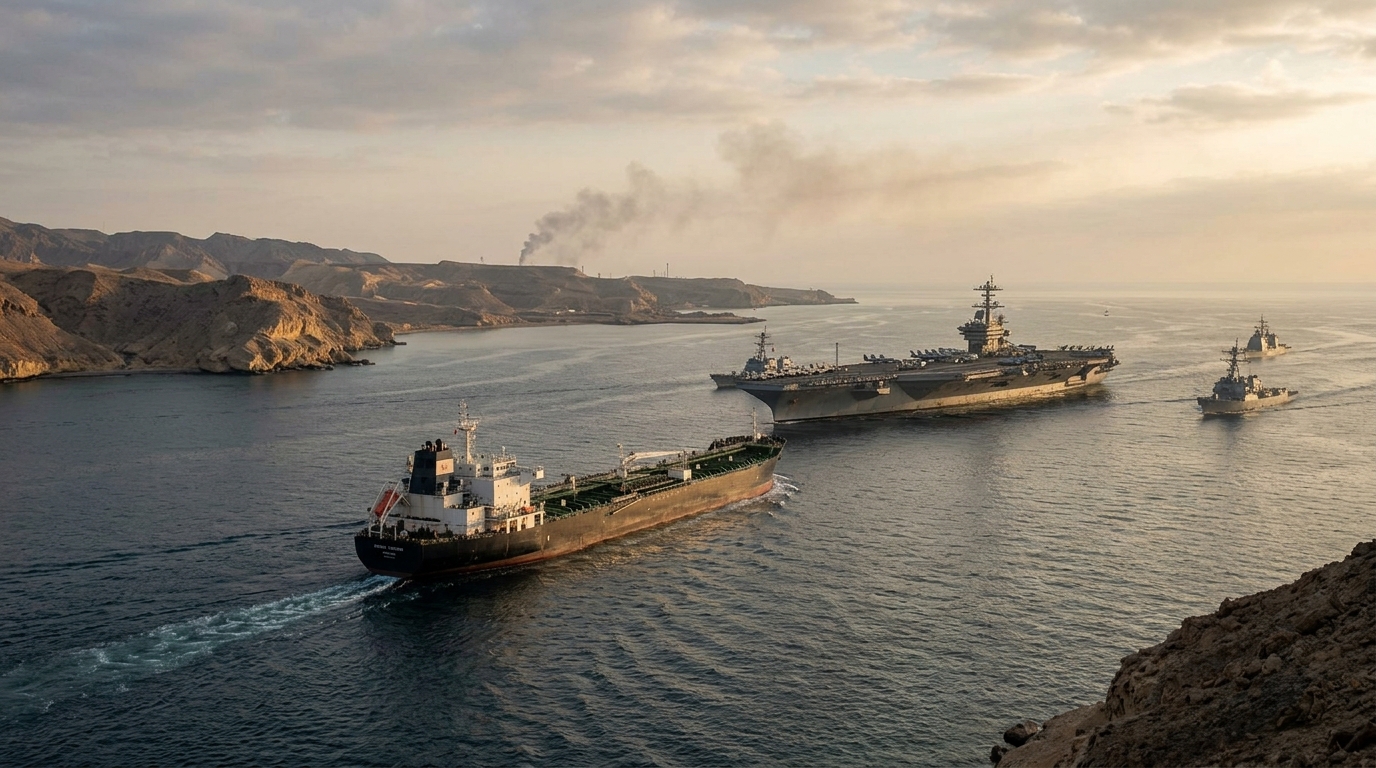
The USS Theodore Roosevelt departed San Diego on September 27 and is headed for Central Command. The Pentagon is deploying an additional aircraft carrier and thousands more sailors and Marines to the Persian Gulf, giving American commanders more options if President Donald Trump chooses to escalate attacks on Iran. Two carriers, the USS George H.W. Bush and USS George Washington, are already in the Middle East. Three carrier strike groups near Iran simultaneously has not happened since April, before the fragile ceasefire that temporarily paused the conflict.
The shipping situation in the strait is, if anything, getting worse. Three Liberian-flagged oil tankers were struck by unknown projectiles when transiting the Strait of Hormuz on Tuesday, according to shipping intelligence service Marisk. The tankers were oil products tanker Al Ruwais and the very large crude carrier Mersin Prosperity, both managed by ADNOC Logistics and Services of the United Arab Emirates, as well as the Aframax-sized tanker Sinbad, managed by Anglo-Eastern Tanker Management. Then on Thursday, a tanker crossing the Strait of Hormuz was hit by an unknown projectile, causing a fire on board, according to the United Kingdom Maritime Trade Operations Centre.
The backdrop is almost surreal. The strait is effectively closed to normal commercial shipping, with just one ship transiting on September 27 versus a pre-crisis baseline of roughly 85 per day. Brent, according to Bloomberg data, was changing hands around $102 on Friday morning. That is not the price of a choke point under recurring attack with a third carrier group steaming toward the region. It reflects, instead, a market that has largely priced in the disruption and is now waiting to see whether Trump pulls the trigger on resumed strikes ahead of the November midterms.
The Brent Puzzle
Trump has told aides he expects to resume bombing Iran by late November. Futures markets are treating that as something between a known risk and a known ceiling. The roughly $1 trillion overall US defense topline enacted for 2026, combined with ongoing ceasefire negotiations, has created an odd stasis: enough escalation to keep oil well above pre-war levels, not enough to push it toward the $130 range that a full Hormuz closure with no workaround would imply.
The bounceback in crude exports is fragile, with multiple tankers coming under attack this week as they tried to transit the strait, and fuel shipments from the Middle East still constrained. That divergence matters for positioning. Crude is finding buyers on rerouting premiums. Products are not moving freely at all.
Where the Trades Sit
ADNOC Logistics and Services has been hit repeatedly. The company says 15 of its vessels have been targeted by missiles and drones since the start of the conflict while transiting the Strait of Hormuz. That is a company dealing with an existential operational risk, not a buying opportunity in the conventional sense.
Frontline is the cleaner tanker trade. Frontline reported its strongest adjusted quarterly earnings in more than 20 years in Q1 2026, as the disruption of oil flows through the strait sent rates to records. Adjusted profit came in at $344.9 million, the company’s strongest quarterly result since Q4 2004. Frontline is a direct equity expression of the tanker-rate shock, with revenue tied directly to the spot charter market. International Seaways offers similar exposure. International Seaways hit an all-time high in mid-September. The risk is that a ceasefire or reopening deflates rates almost immediately: Frontline CEO Lars Barstad has said oil tanker traffic through the strait should quickly increase if the US and Iran reach a credible deal.
On defense, the case has two distinct layers. RTX heads into its October 20 earnings report with serious momentum. RTX enters that quarterly report with a strong defense backlog, a fresh $20.7 billion AMRAAM contract, and management guidance that already points to higher 2026 sales, EPS, and free cash flow. Lockheed is the longer-duration bet. Lockheed ended 2025 with a record backlog of nearly $194 billion, representing more than two-and-a-half years of sales. The combined order backlog of both companies now exceeds $500 billion, highlighting that demand for defense equipment continues to outpace the industry’s production capacity.
The Action Plan
Oil near $102 with a third carrier en route and tankers getting hit every day in Hormuz is not complacency: it is a market that has already priced in the base case and is waiting for the next binary event. The trade is not to chase Brent higher on headlines. It is to own the assets that benefit whether the conflict lingers or escalates: tanker operators on elevated rates, and defense contractors on a backlog that Washington is contractually committed to funding. RTX’s October 20 earnings call is the near-term catalyst to monitor. If the Hormuz ceasefire talks collapse before then, the Frontline and International Seaways positions get a secondary boost. Watch the UKMTO daily brief: another week of sustained tanker strikes without a diplomatic response would be the signal that the market’s $102 equilibrium has more upside to price in than it currently admits.