On October 5, the U.S. Department of Energy committed up to $4.2 billion in conditional loan financing to Vistra Corp to upgrade nuclear plants in Pennsylvania and Ohio. On October 14, the stock fell 6.5%. Vistra closed at $151.79, leaving it about 30% below its all-time high of roughly $217.
The DOE loan announcement changed the economics of this business. The market has not yet decided whether to care.
The Business
Vistra is an independent power producer operating nuclear, natural gas, coal, solar, and battery storage assets across Texas and the PJM grid. Unlike regulated utilities that earn capped returns, it sells into wholesale power markets and negotiates bilateral contracts directly with hyperscalers. That structure creates merchant exposure on the downside but pricing power on the upside, and the upside right now is AI data centers with legally binding demand for decades.
Vistra has signed 20-year power purchase agreements with Meta for 2,609 megawatts at its PJM nuclear plants and with AWS for 1,200 megawatts at its Comanche Peak facility in Texas. Those contracts provide visibility that most utilities never see. Second-quarter adjusted EBITDA rose more than 30% year over year to $1.767 billion. Guidance for 2026 and 2027 was reaffirmed, with up to $1 billion committed to its Helix digital infrastructure platform.
Why Wall Street Is Paying Attention
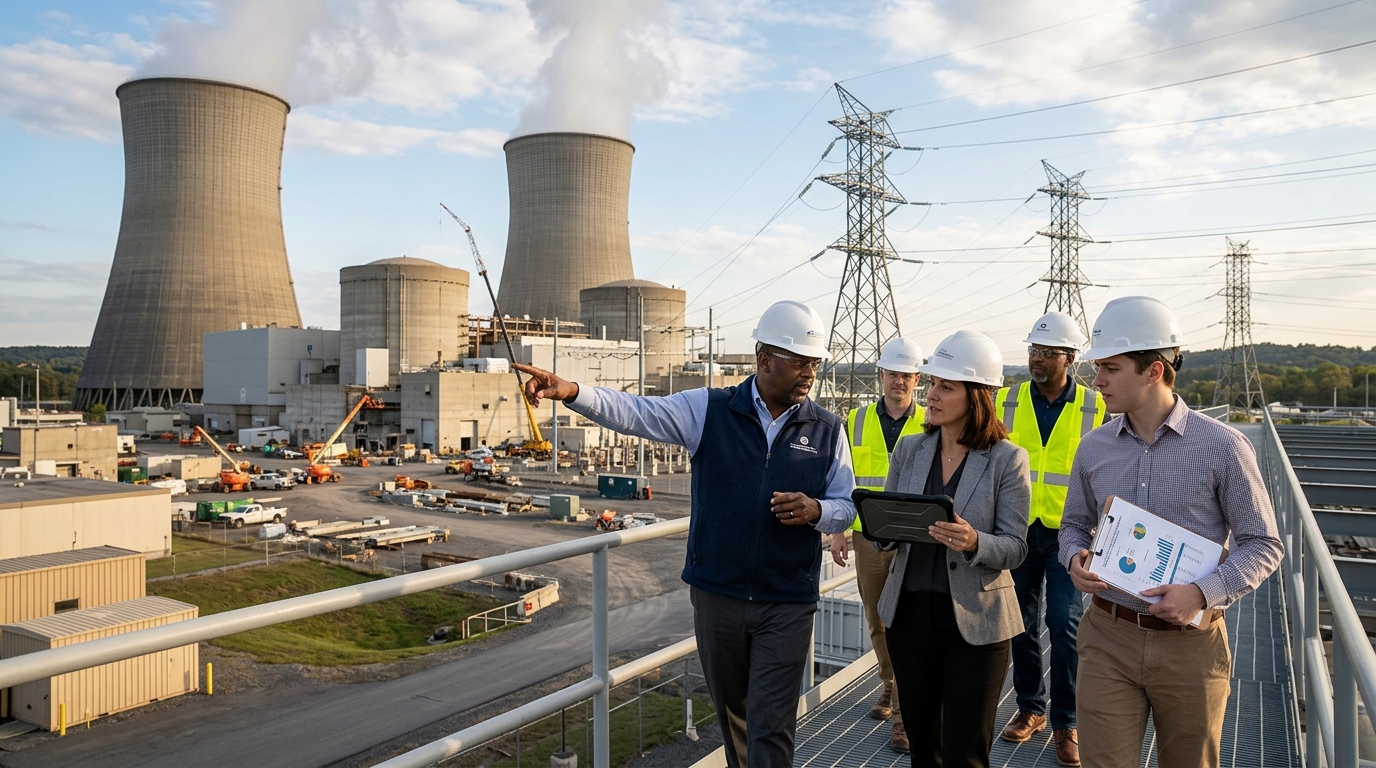
The $4.2 billion DOE loan is not charity. It finances nuclear uprates at Beaver Valley in Pennsylvania and Davis-Besse and Perry in Ohio, adding 433 megawatts of clean baseload capacity without building new reactors, and preserving nearly 4 gigawatts of existing generation that serves more than 3 million homes. By moving the capital cost of those uprates to the federal balance sheet, Vistra collects the future cash flow without risking its own capital on the construction phase.
Analysts are responding accordingly. Jefferies is out with a $298 price target, which it says implies about 88.5% upside from the recent trading price. The broader consensus sits at a $217.61 price target, implying roughly 43% upside from the October 14 close. Morgan Stanley carries an overweight rating with a $227 target. Simply Wall St’s valuation model has been in flux, and its estimate has appeared as low as about $130 and as high as the mid-$300s.
What Is Driving the Opportunity
The disconnect between the stock price and analyst conviction is wider than typical. Analysts are treating Vistra as a high-demand grid platform linking long-term AI data center load to uprated nuclear assets and gas peakers. The nuclear loan fits that view precisely, tying more of Vistra’s output to government-backed funding and multi-decade power contracts. At the current price, the stock trades at a mid-to-high teens multiple of 2026 forecast earnings, with consensus earnings growth expectations in the high teens for at least one of the next two years. That is a reasonable price for an ordinary utility. For one with contracted hyperscaler revenue running for decades and federal capital supporting its expansion, it looks cheap.
Vistra also committed up to $1 billion to the Helix digital infrastructure platform alongside Nvidia and KKR, positioning itself as more than a power supplier. The company is building toward the full AI infrastructure stack.
What Could Go Wrong
The bear case centers on two risks. First, low Texas wholesale power prices have been a persistent drag, and Vistra’s merchant exposure in ERCOT means any softness in spot power prices flows directly through to earnings. Second, PJM Interconnection’s regulatory environment is actively contested. PJM has proposed an Interim Resource Adequacy Service and a Large Load Registry at FERC, and a ruling that discourages new large-load contracting structures could cap upside from long-term deals. The debt-to-equity ratio is 5.87, reflecting the capital intensity of the business.
The Bottom Line
Vistra offers something rare in today’s market: a real asset business with contracted AI revenue, federal loan backing, and a stock price that reflects none of it. The selloff on October 14 had nothing to do with Vistra’s operations. The $4.2 billion DOE commitment, the Meta and AWS agreements running for 20 years, and the forward earnings multiple together make this one of the most compelling risk-reward situations in the power sector today.