Dear Reader,
Elon Musk just made a shocking prediction.
He said 99% of compute long-term will be for a new kind of AI.
And one tiny company holds 150 patents on the tech that makes it possible.
OpenAI, Microsoft, IBM, AMD, and Amazon have all signed multi-billion-dollar deals with the little-known company.
And I believe this company is in a similar position to Nvidia…
When I recommended it in early 2016…
Before it soared 37,800%…
And gave my readers the chance to turn $5,000 into $1,895,000.
If this stock goes the same way, which I believe it will…
It could be the only stock you need to retire.
Click here to see all the details
Jeff Brown
Founder & CEO, Brownstone Research
P.S. Don’t delay, I believe this company is about to announce its biggest deal ever on November 11. Click to get all the details before it’s too late.
Tanker Stocks Face Their Biggest Policy Threat in Years
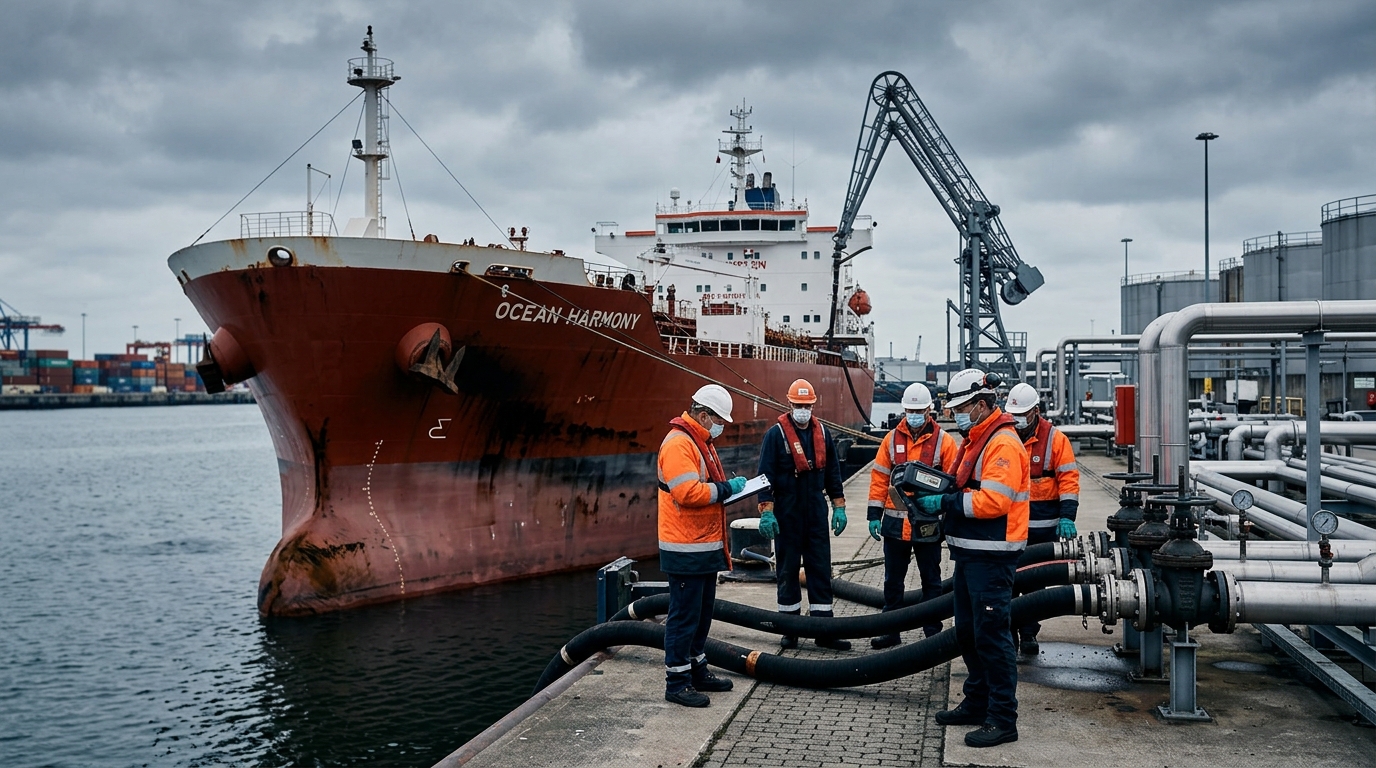
The trade that has worked all year just got its first serious policy headwind. Reuters reported Wednesday that the Trump administration is weighing easing sanctions on shadow fleet tankers tied to Russia, Iran, and Venezuela, potentially allowing “legal oil” to flow on previously sanctioned vessels rather than adding a single new barrel of sanctioned crude to the market. Brent fell to about $104.3 per barrel by Thursday morning, down from Wednesday’s $106.06 settlement. WTI slid to around $94. Crude itself is not the trade here. The damage lands in shipping equities.
Asian shipping stocks took a beating on Thursday as investors scrambled to reassess the extraordinary freight boom that has pushed some tanker spot segments into million-dollar territory. That is the market pricing a regime change, not a data point. And the position is straightforward: if Washington succeeds in loosening any part of this sanctions architecture, the rate environment that has inflated FRO, DHT, and INSW valuations for most of 2026 becomes structurally less secure.
What the Policy Actually Does
The proposal targets “legal oil” only, crude and petroleum products not subject to US sanctions would be eligible to move on blacklisted hulls. Russian and Iranian crude itself remains restricted. Companies seeking to use shadow fleet vessels would need permission from the US Treasury Department. Energy Secretary Chris Wright flagged the discussion publicly this week at the WPC Energy Congress in Riyadh, confirming this is more than a trial balloon.
The structural argument against panic is real. Lifting sanctions on tankers that are mostly old and not well maintained is unlikely to add meaningful mainstream fleet capacity overnight, especially because many tankers sanctioned over Russian or Venezuelan links have remained active in opaque trade. A broad easing of freight rates is also not guaranteed because ship insurers and counterparties still operate under EU and UK rules. Clarksons Research estimates that 1,010 oil tankers totaling about 121 million deadweight tons are individually sanctioned, representing roughly 17% of global oil tanker fleet capacity, and much of that fleet stays effectively constrained regardless of what Washington does next.
Where the Real Risk Sits
The physical impact may be limited, but the signal is not. With high fuel prices a political risk for Trump ahead of the November 3, 2026 midterm elections, Washington has already moved this year to relax restrictions around Russian fuels, and is now looking at the ships blacklisted for hauling sanctioned cargoes. That pattern matters. Each concession lowers the political cost of the next one. Tanker owners built their bull case on a sanctions floor that now has visible cracks.
Tanker equities, which have benefited from record rates, may be sensitive to headlines like this even if the real capacity added proves small. That is the asymmetry working against long positions in FRO, DHT, and INSW today. The downside from a credible policy threat is immediate and sentiment-driven; the upside from continued rate strength requires no new bad news, and bad news is arriving at regular intervals.
Levels to Watch
For traders holding tanker equity longs, the question is whether this is a shakeout or a turning point. No formal easing has been announced. If the proposal stalls in Treasury or runs into the EU and UK insurance wall, these names can recover quickly. If Wright pushes a formal rule through before the midterms, the freight rate premium embedded in current valuations starts unwinding in earnest. Watch for any OFAC guidance language and monitor whether European insurers signal any willingness to follow Washington’s lead. Until one of those conditions resolves, the risk-reward on fresh long entries in tanker equities is unfavorable. Trim on strength; let the policy clarity come to you.