
October 17, 2026
Bonus Content: Saudi Arabia Is Pumping Again. The Oil Rally Is About Ships.
At a time when copper demand is growing, a long-dormant copper property is about to thrust one little-known mining company into the spotlight.
It’s all happening in Canada’s Yukon territory, an area with a rich mining history and the kind of infrastructure and friendly regulatory environment that mining companies fight tooth and nail for.
In the case of copper mining, there is one area that has more than a century of history with past production of over 265 million pounds and yet there’s still more to be discovered.
And it couldn’t have happened at a better time.
Countries need copper to build their power grids and move away from fossil fuels.
Tech giants need copper to power their data centers.
And new mines just aren’t coming online at the pace they need to in order to keep up with that kind of surging demand.
It’s a reality the market is only just beginning to wake up to, and that fact is showing up in the price of copper as it marches steadily toward new all-time highs.
Since the process of bringing a mine online and getting the metal out of the ground is so intensive, the few companies capable of doing it are the ones in line to drive returns as more nations and corporations scramble to secure copper supply.
One mining company with assets in that storied Yukon territory is perfectly positioned to seize the opportunity to become a leading name in the copper mining industry thanks to district-scale projects that have produced exceptional results in the past.
Some of these areas haven’t been explored or drilled in over 40 years because of price collapses. But with demand resurging and mining technology having advanced in the time since, now is the time for this area to come back into the conversation.
Results so far have already been promising. Recent results have turned up thick, continuous zones of mineralization that have not only confirmed what past drillers knew, but have expanded beyond that and into new territory.
So this company is only just getting started.
Thanks to its robust treasury, experienced leadership, and ongoing work, it’s well-positioned to profit from rising copper demand into the foreseeable future.
Now’s the perfect time to buy in before more traders become aware of it.
You can learn more about how to do that in our brand-new FREE report where we go over the company, its history, its current assets, and its plans for the future in the unfolding copper bull market.
Click here to access the report now, before time runs out and more people learn about this opportunity.
Saudi Arabia Is Pumping Again. The Oil Rally Is About Ships.
Saudi Arabia told OPEC it pumped 8.372 million barrels per day in September, a gain of more than 2 million bpd from August and a sharp recovery from output levels not seen since the early 1990s. Global oil supply rose 2.5 million barrels a day month-on-month to 102.3 million bpd, driven by Gulf producers, with OPEC+ gains of 2.1 million bpd led by Saudi Arabia, according to the IEA. On the surface, that looks like a supply story. It is not. Brent settled at $109.86 on October 16, up 3.7% on the day, after touching $110 for the first time since May, according to AP market reporting.
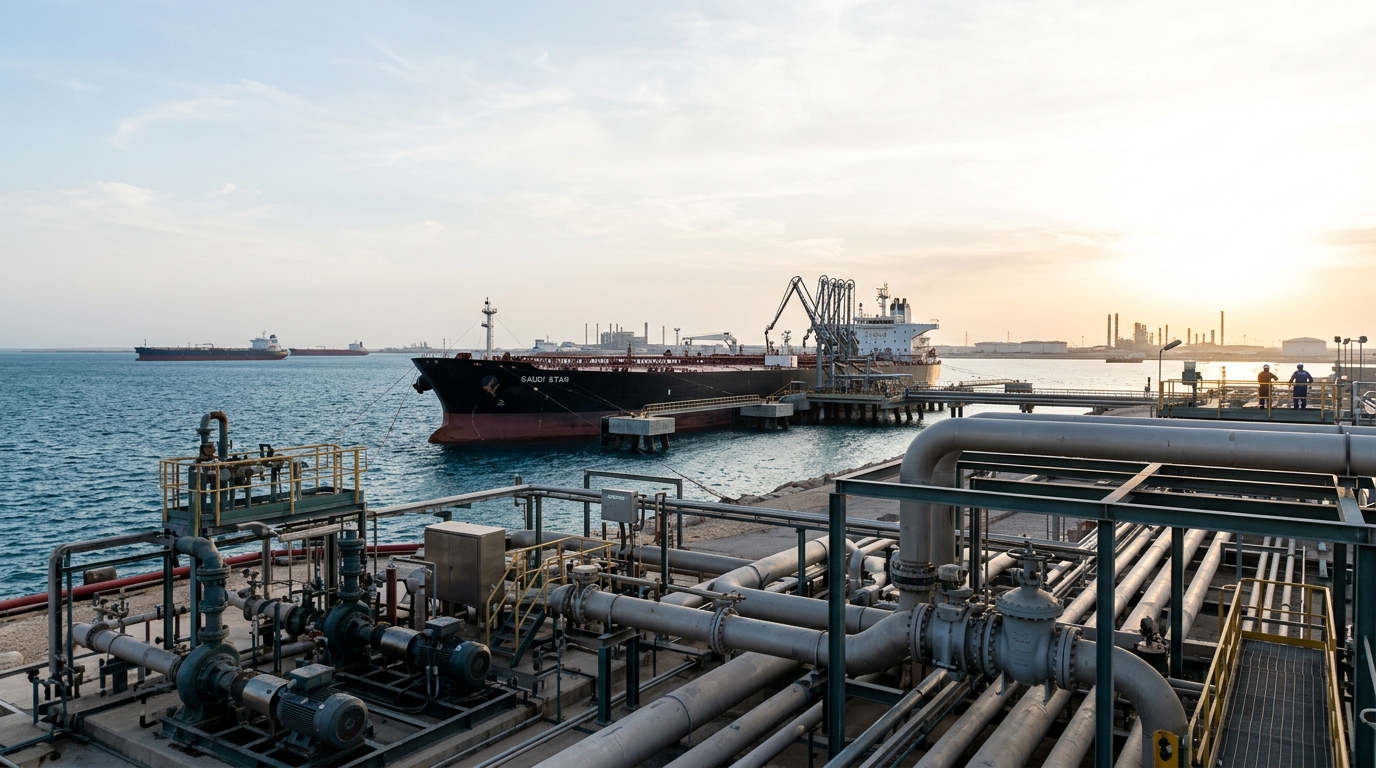
The numbers expose the real trade. Saudi Arabia is producing more oil than at any point during the Iran war, and Brent still surged to $110. The explanation is transit, not inventory. The Strait of Hormuz is effectively closed to normal commercial traffic as of October 16, with IMF PortWatch data showing two AIS-recorded crossings on October 11 versus roughly 85 per day before the crisis. Crude exports through Hormuz are running well below prewar levels, but specific week-by-week barrel figures vary by data source and are hard to verify in real time because many vessels sail with transponders off. The barrels exist. Getting them to a buyer is the problem.
Daily charter rates and insurance have both moved violently higher since the crisis began. Some trade press has quoted supertanker charter rates near $800,000 per day during the 2026 spike, while war-risk insurance premiums have been quoted in the high single digits as a share of hull value in the worst windows, translating into multi-million-dollar coverage costs per voyage for large tankers. That cost structure does not disappear when Saudi output recovers. It persists as long as missiles and drones patrol the chokepoint.
The Pipeline Conversion: Real Capacity, Real Limits
Riyadh’s answer is infrastructure. The kingdom could add up to 1.2 million barrels per day of export capacity within seven to eight weeks by temporarily converting a gas pipeline for crude shipments. Energy Minister Prince Abdulaziz bin Salman has said Saudi Arabia is working with Aramco on a conversion, with 1.2 million bpd as a near-term target and further investment potentially raising capacity over time.
The constraint is time and geography. The same Red Sea export route has been disrupted by drone strikes in recent weeks, forcing Saudi Arabia to halt crude loadings at Yanbu before restarting flows, as Reuters reported. Port and loading capacity at Yanbu can become the binding constraint, because extra pipeline volume only reaches the market if loadings can keep pace. This is a workaround, not a structural fix.
Where the Trade Lives
Brent at $110 with 102.3 million bpd of supply is the market pricing transit risk, not scarcity. That distinction determines positioning.
Three pressures are compounding at once: Iranian attacks tied to Hormuz shipping, strikes on Saudi infrastructure, and renewed uncertainty around Europe’s energy security. That mix means one de-escalation headline may not unwind the rally. Bank scenarios also remain wide: Goldman has flagged a roughly $80 Brent base case for Q4 2026, with upside above $120 in a persistent-disruption scenario, based on widely reported summaries of the bank’s analysis.
The same disruption that is lifting Brent is reshaping product markets downstream. U.S. refiners have captured record crack spreads as rerouted global fuel flows turned domestic plants into swing suppliers — but those margins carry their own diplomatic headline risk.
For traders, the structural opportunity sits in companies insulated from the transit problem. Western-domiciled supermajors like ExxonMobil are positioned to capture higher global pricing without bearing the most direct operational exposure to Gulf transit. But the specific percentage performance comparisons in the original draft are not reliably verifiable from a single consistent source as of October 17, 2026, so they should be treated cautiously. Q3 earnings arrive shortly, and $109 Brent flows directly into upstream margins.
The bull case for crude prices does not rest on Saudi Arabia pumping less. It rests on the Strait staying dangerous. Kpler has argued that flows can recover unevenly through escorts and operational adaptation without waiting for a comprehensive political agreement, which implies a choppy, stop-start path rather than a clean normalization. Until that calculus changes, the risk premium in Brent is structural. Build energy exposure around transit beneficiaries, not production volume.
The transit premium is only half the structural picture. OPEC+ capacity reviews and the 2027 baseline process set the supply ceiling that transit risk trades against.
Risks to Watch
If reserve releases expand and transit through Hormuz stabilizes, the supply disruption risk premium embedded in oil prices could shrink sharply, with Brent potentially falling below $100. Any credible diplomatic development between the U.S. and Iran is the primary risk to short-dated crude longs. Watch the Yanbu terminal for fresh targeting, and monitor whether added export workarounds deliver on schedule. Execution delays would reinforce the transit-risk bid; early delivery could take the edge off near-term supply anxiety without resolving the deeper Hormuz problem.