November 6, 2026
Bonus Content: Nvidia and the Data Center Complex Are Selling Off. The Build-Out Isn’t Stopping.
They named him “Mr. 1,000%” for a reason:
Because he’s called 51 different stocks that have gone up 1,000% or more.
FIFTY ONE! It’s almost unbelievable.
One example is his call on NVDA back when it was $6…
Now, 6 years later, it’s up more than 3,100%.
He also wrote up every single “Magnificent 7” stock before that name was even a thing.
Look: can you imagine grabbing 51 different 10-baggers?
Even ONE 10-bagger can be lifechanging.
And “Mr. 1,000%” has called dozens and dozens over his career.
That’s why you need to see the details on his #1 AI stock for right now.
To your wealth,
Stephen Prior,
P.S. We’ve frantically worked behind the scenes for months to launch Mr. 1,000%’s new service. Here are the details…
Nvidia and the Data Center Complex Are Selling Off. The Build-Out Isn’t Stopping.
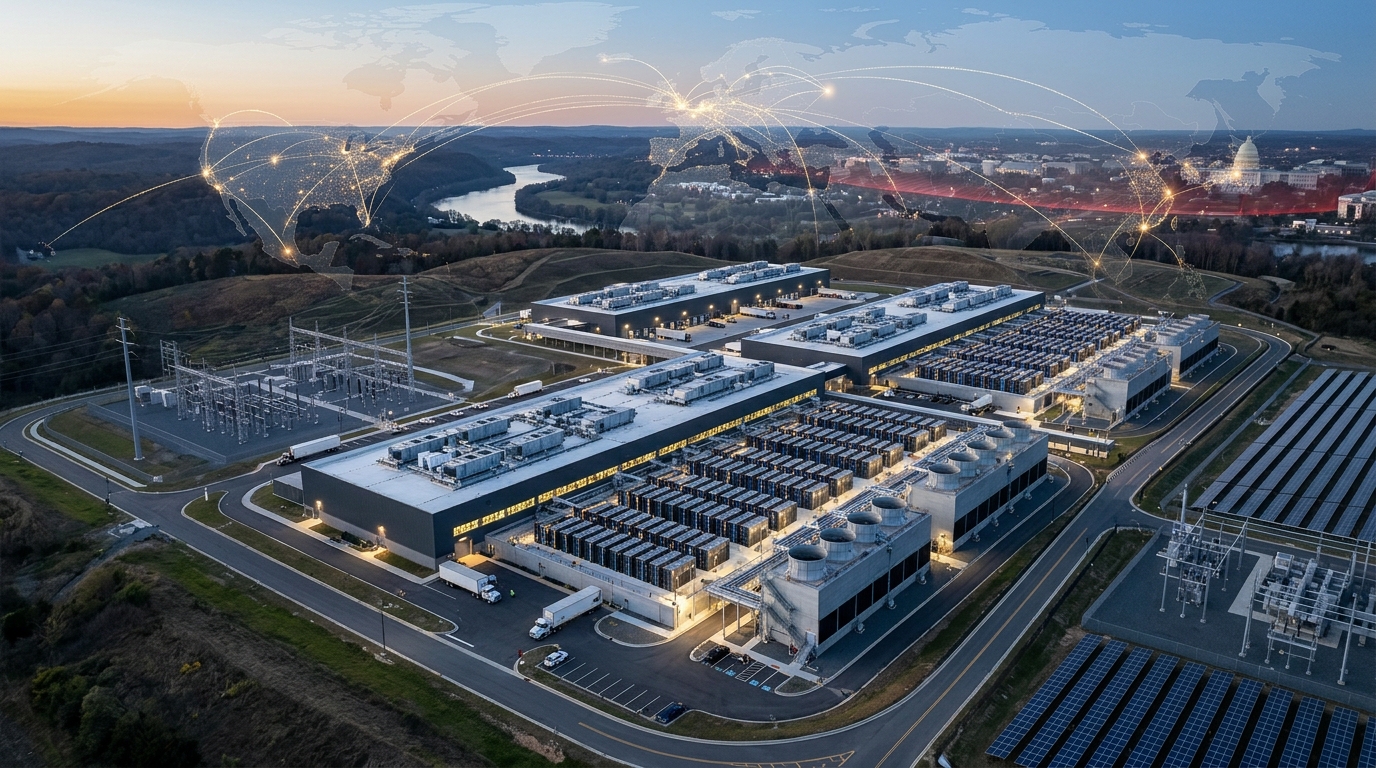
Washington does not build data centers. It just decides where they don’t get built. That distinction matters enormously this morning, as the market treats the Sanders-AOC moratorium push like a demand-destruction event rather than a demand-displacement one.
Thursday’s selloff in hyperscaler and neocloud stocks deepened as investors reassessed the mounting risks that the Democratic sweep poses to the AI infrastructure boom. By the close in New York, the Nasdaq was down 5.5%. Broadcom and Nvidia fell about 10% and 9%, respectively, while Oracle dropped about 7%.
The political catalyst is specific. Sanders and Alexandria Ocasio-Cortez introduced an AI data center moratorium bill earlier this year. Representative Yassamin Ansari has also called for a pause on advanced AI development as an early priority for the new Democratic majority. Separately, tracking from The Information put the nationwide count of active data center bans and restrictions above 500 by early August 2026.
Democrats are not united on the issue. Nadine Smith of Color of Change noted that some party members fear a ban could hamper AI development and undermine national security. That internal split matters for legislative probability. It does not change the near-term price action, but it does shape the thesis for anyone looking past the headlines.
Here is the structural argument the selloff ignores: turn a project down at the county level and it moves to the next county; slow it nationally and it gets built in the Gulf, in Asia, and within a decade, potentially beyond. Gulf states offer electricity at roughly $0.05 to $0.06 per kWh, sovereign wealth that removes financing constraints, and a permissive regulatory environment. Saudi Arabia’s compute ambitions are already substantial, with major state-backed plans that target 1.9 GW of capacity by 2030 and 6.6 GW by 2034.
Gulf sovereign wealth funds are not passive observers of this shift. Gulf investors have been reorienting AI infrastructure capital toward Asia as geopolitical friction raises the appeal of stable markets.
CoreWeave (CRWV) has been positioning for exactly this geography. The company brought the majority of its planned 22.5 MW of capacity online in Copenhagen and is expanding its European footprint to nine data centers across Denmark, the United Kingdom, Spain, Sweden and Norway. Its planned network reaches the United Arab Emirates, India, Singapore, Indonesia, Japan, South Korea, and Australia, and in early October CRWV announced a 240 MW data center deal in India alone. A US freeze accelerates every one of those investments. CRWV fell roughly 10% Thursday, which is the market pricing its US permitting exposure, not its global order book.
Nvidia (NVDA) is the most interesting case. Its chips go wherever the data centers go. A US-specific moratorium would not stop global AI data center construction; it would likely redirect incremental investment toward markets with fewer constraints. Nvidia’s customer base is international by design. Oracle and Nvidia announced plans on October 27, 2026 to expand Oracle Cloud Infrastructure Superclusters with Nvidia Vera Rubin NVL72 systems to multi-gigawatt scale, a deal that spans jurisdictions no congressional bill can touch.
The power and cooling names, VRT, GEV, PWR, and ETN, face a more complicated read. Their US order books are genuinely at risk if permitting slows. UBS warned that construction pauses could put about 30% of expected 2028 US capacity additions at risk. But their equipment ships globally, and a build-out that migrates to the Gulf or Southeast Asia still needs transformers, cooling systems, and switchgear. The question for each is what share of backlog is US-permitted versus already international.
The highest-conviction read today: the selloff is treating a permitting risk as a demand-destruction event. It is not. Monitor CRWV’s international capacity announcements and Nvidia’s forward guidance on non-US deployments as the cleaner signal of where this trade resolves.