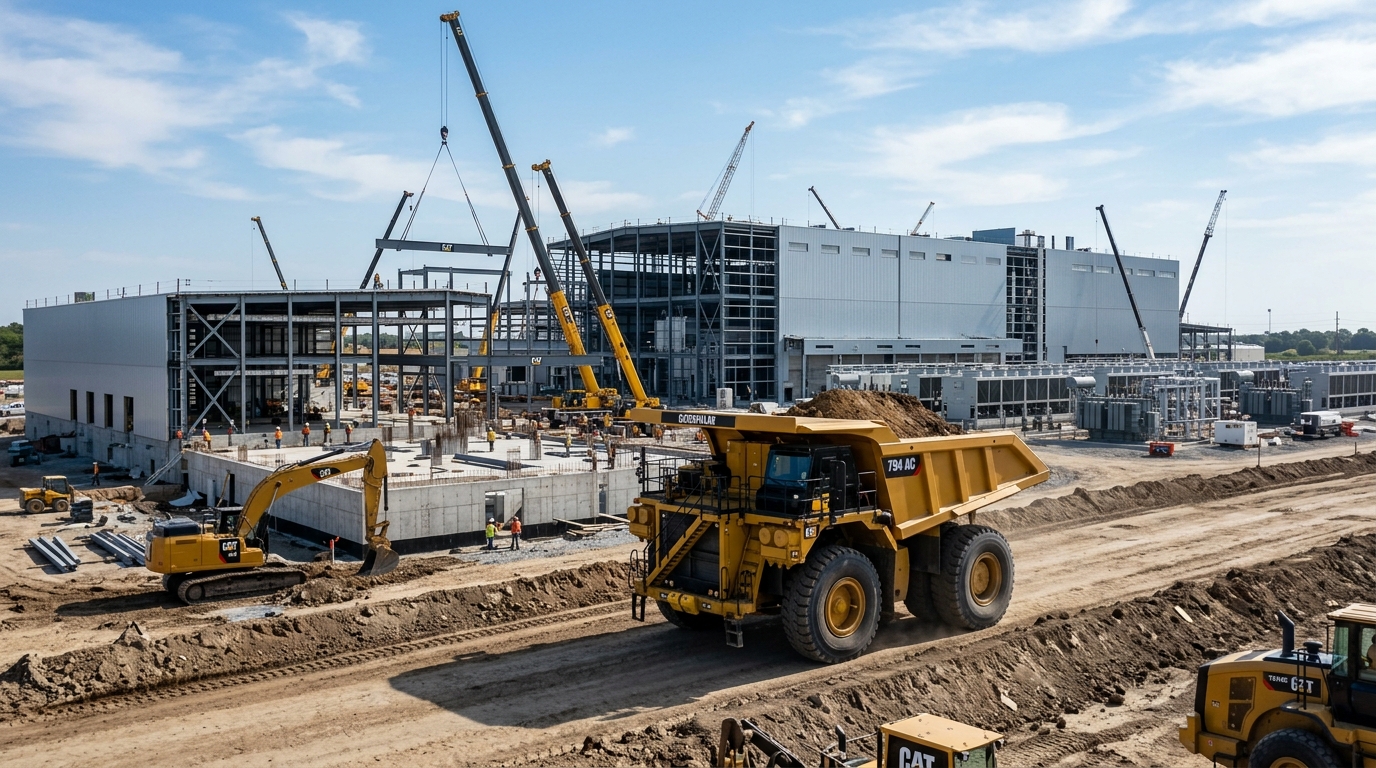
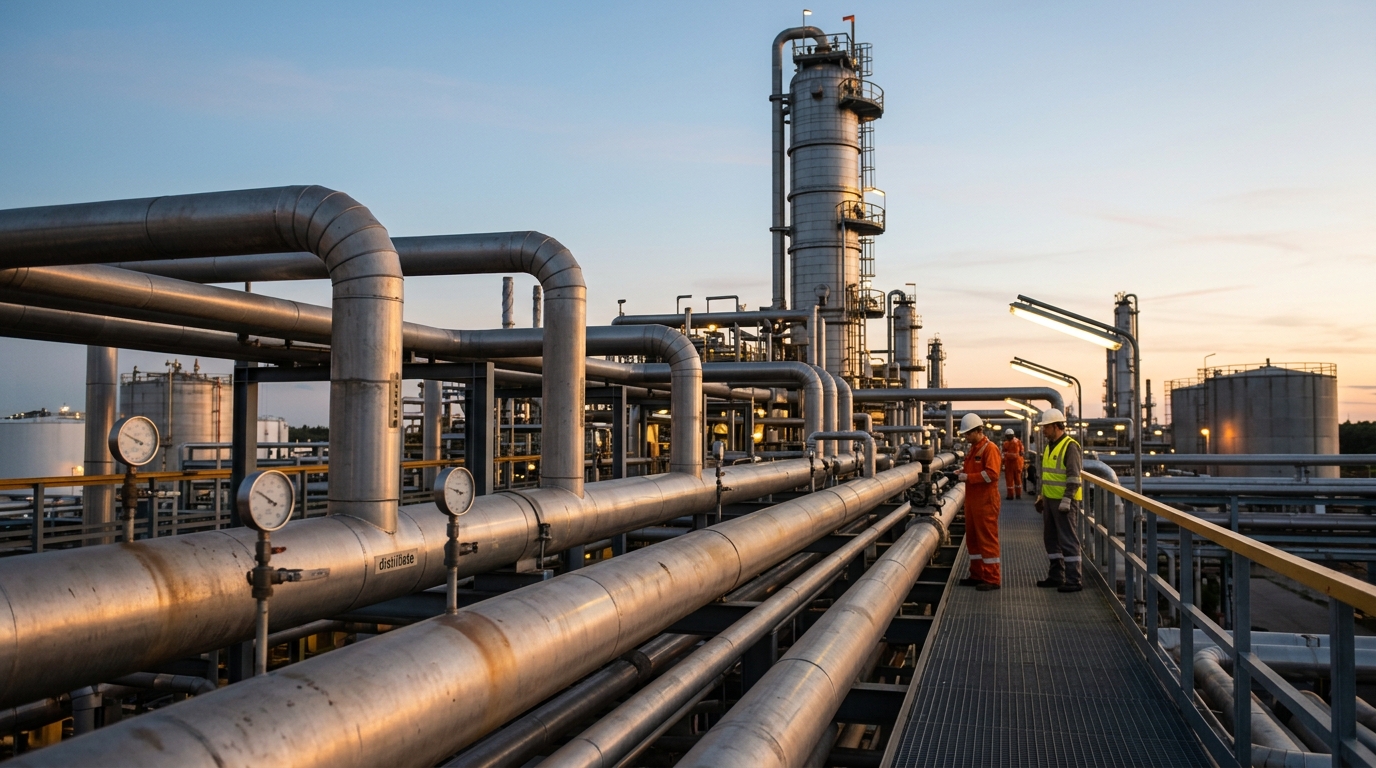
Brent is trading around $89 this morning, down on the week as markets price in a possible Hormuz supply improvement. That move is real. What it misses is the distillate market running in exactly the opposite direction, driven by a conflict on the other side of Russia’s map.
Market Snapshot
Brent was down about 0.3% early on August 28, trading around $89 a barrel. Oil is on track to end the week lower as markets weigh signs of diplomatic progress in the Middle East, with Iran and Oman still working on the details of a revenue-sharing and traffic-management framework over the Strait of Hormuz, even as Iranian officials stress it does not guarantee an immediate reopening. Falling crude on Hormuz optimism is one story. Tightening diesel on Russian refinery destruction is another, and the two are now pulling in opposite directions.
Stocks in Focus: VLO, MPC, PBF
Russia accounted for roughly 10% of global diesel supplies before Ukraine’s strikes on its fuel-producing industry, and an extension of export restrictions adds further pressure to already-tight global fuel markets. Ukraine carried out roughly 18 attacks on Russian refineries earlier this month alone, matching the record set in July.
Russia is discussing extending restrictions on diesel exports as Ukraine continues to strike its refineries at a record pace, with the government potentially prolonging curbs for producers through September 1. Authorities have also floated longer-dated restrictions, and the market is treating the policy stance as sticky rather than temporary. Russia extended export restrictions on gasoline and diesel through January 31, 2027, citing domestic fuel-market strains after sweeping Ukrainian drone attacks on refineries and storage hubs.
The damage is structural, not seasonal. Ukrainian drone strikes have reduced Russia’s oil refining volumes to 21-year lows, with crude runs falling to around 3.80 million barrels per day. Oil processing at Rosneft’s Kuibyshev refinery was halted as of August 28 after Ukrainian drones damaged both of its main crude distillation units, each with 70,000 barrels per day of capacity, along with several secondary units. That refinery had only resumed operations on August 21 after major repairs begun July 1. That cycle, strike, halt, partial repair, restrike, is now the operational baseline.
An independent oil and gas analyst described the Ukrainian strikes as causing “the most severe crisis in recent years,” adding that the size, coordination, and repeated waves make it difficult for Russia to repair refineries before the next attack occurs.
U.S. refiners are the direct beneficiaries. The ultra-low sulfur diesel futures crack spread hit a record $93.84 per barrel on August 10. The combined Q2 2026 profits of Marathon Petroleum, Phillips 66, and Valero reached $12.6 billion, the highest since the immediate aftermath of Russia’s 2022 invasion. Valero’s realized refining margin rose sharply year over year, while Marathon’s refining and marketing margin jumped from $17.58 to $36.33 per barrel.
The key differentiation for today’s session: Valero has outsized exposure to distillate-driven margins among large-cap U.S. refiners, while PBF management has indicated Q3 2026 is shaping up to be at least as strong as Q2, with an estimated 5 to 6 million barrels per day of global refining capacity still offline and inventory restocking expected to take years.
Risk Radar
Russia is preparing to escalate attacks on Ukraine after concluding that negotiations for a peace deal have reached a dead end, according to people close to the Kremlin, with Russia weighing an intensification of ballistic missile attacks on Kyiv and infrastructure targets in other Ukrainian cities. Negotiation frameworks have effectively collapsed, leaving the two warring sides back at square one. A wider war is not a diesel-price-down scenario.
The offsetting risk cuts the other way. The margin driver is geopolitical, and geopolitical premiums are reversible: a ceasefire in the Gulf that holds would push crack spreads sharply lower and take the refiners with it. Brent softening on Hormuz progress while diesel cracks hold tells you the market is not yet resolving that tension. Watch whether the crack spread tracks crude lower or holds its own premium.
The Cheat Sheet
- Top Market Theme: Crude and distillates are decoupling as Hormuz diplomacy pressures Brent while Russian refinery destruction keeps diesel structurally tight.
- Stock to Watch: VLO, the highest-conviction diesel crack play, given its dual-stream exposure across 15 refineries and a Q2 that already beat estimates by 25%.
- Sector to Watch: U.S. independent refiners. The diesel restriction extension is the catalyst that separates this group from a softening crude tape.
- Biggest Risk: A credible Hormuz reopening deal could compress the entire crack spread complex rapidly, regardless of Russian supply.
- Biggest Opportunity: The diesel crack diverging from Brent is the signal. Refiners with heavy distillate exposure benefit from exactly this spread widening, independent of where crude settles.
- One Thing to Remember: Russia cannot repair its refineries faster than Ukraine can strike them. That repair backlog is the floor under diesel cracks, and it does not move with crude.