
When the IMF publishes its full World Economic Outlook in Bangkok on Tuesday morning (October 13, 2026), the headline number will be 3.0% global growth for 2026. That figure, unchanged from July, will draw most of the attention. The more useful question for investors with money outside the United States is what lies underneath it.
The answer, in short, is a widening gap between two groups of countries that the same 3.0% figure papers over entirely.
A World Being Pulled Apart
In her curtain-raiser speech in Singapore on Wednesday (October 7, 2026), IMF Managing Director Kristalina Georgieva said the world was being pulled in two directions: a negative energy supply shock from the Middle East conflicts and a positive demand shock from artificial intelligence. She said the combined impact of these forces is highly uneven across the world, and that the largest growth downgrades in the new forecasts will be concentrated in economies damaged by war.
Those economies include Ukraine and other countries directly exposed to conflict disruptions. These are not obscure frontier markets. They are countries whose sovereign bonds, bank stocks, and commodity-linked equities show up in emerging-market ETFs that millions of investors hold without scrutiny.
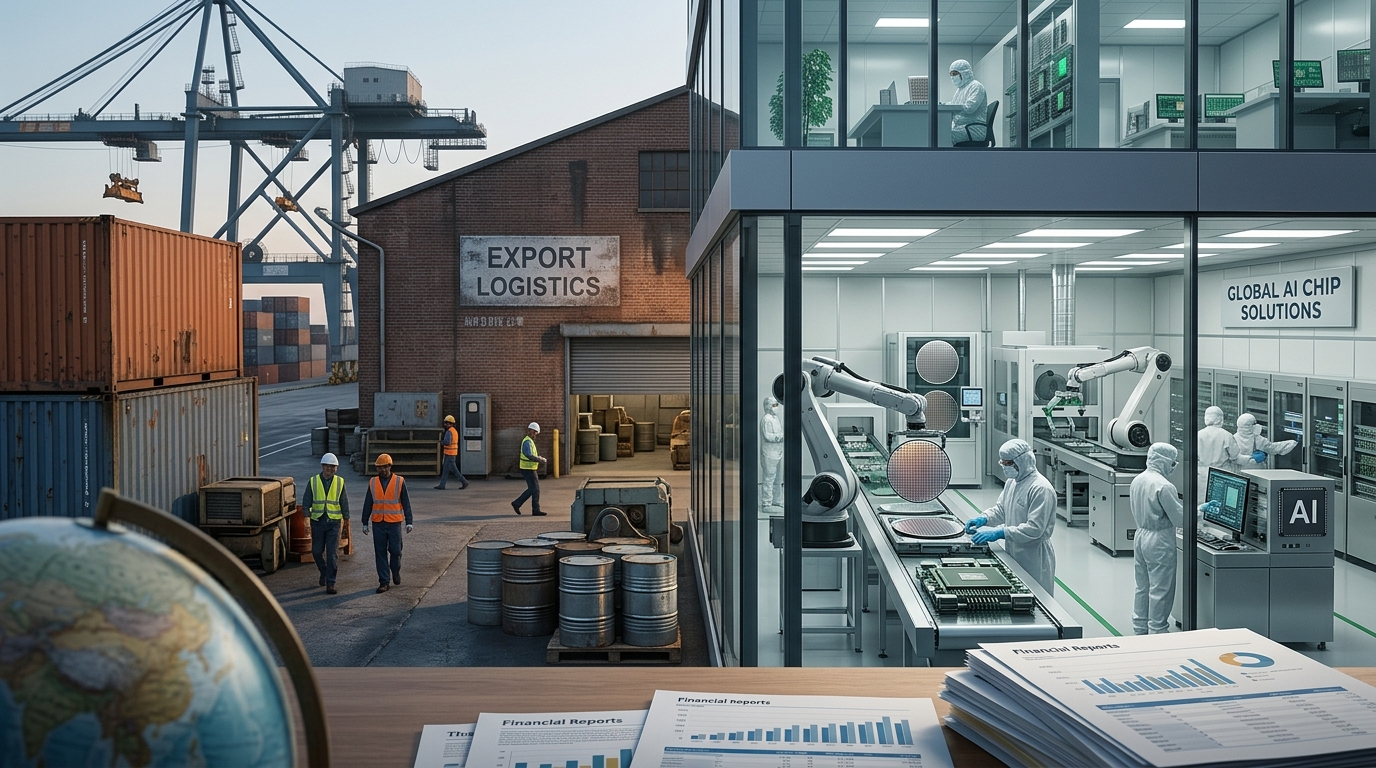
On the other side of the ledger, the AI supply chain is producing growth numbers that would have seemed implausible two years ago. But the country list and the numbers matter, and this is where investors should be careful about convenient labels. While several Asian economies have benefited from tech and data-center demand in 2026, the IMF does not frame this as a simple set of “top four net exporters of AI-related hardware,” and the specific “4.4 percentage point” average growth surprise cited here is not supported in the IMF materials available ahead of the Bangkok release.
South Korea, for example, did post strong early-2026 momentum, but the widely reported figure was about 1.8% real GDP growth quarter on quarter in Q1 2026 (revised from 1.7%), not a 7.5% quarterly growth rate. The driver was a sharp rebound in exports, including semiconductors.
Where the Opportunity Sits
Georgieva argued that the AI demand shock is becoming a macro force. But the claim that AI-related hardware and technology products now account for more than one-tenth of world goods trade is too high relative to published estimates. A safer reading is that AI-related goods are a fast-growing but still relatively small share of global merchandise trade.
Taiwan’s official statistics agency has raised its 2026 GDP growth forecast to about 11.05%, citing strong AI-related demand. Malaysia’s 2026 growth projection stands at 4.7%, with the IMF attributing some of that to data-center activity and an upturn in the global technology cycle. Vietnam also benefited: the IMF revised its 2026 growth forecast up by 0.4 percentage point to 7.5%, citing stronger-than-expected technology exports.
For investors, broad emerging-market exposure no longer means what it did a decade ago. A fund that blends South Korean chipmakers with Gulf energy exporters and Ukrainian sovereign debt is combining assets with almost nothing in common beyond their EM classification.
Building the International Slice Deliberately
The practical move is to treat the IMF’s split economy as a portfolio construction prompt rather than a forecast to file away. The IMF’s July 2026 World Economic Outlook Update, titled “Global Economy in Crosscurrents of War and Technology,” projected 3.0% growth for 2026 and 3.4% for 2027, while emphasizing that the outlook is uneven: war-related energy shocks weigh on some economies, while AI-related demand and investment lift others.
That framing translates directly into portfolio decisions. Allocations to Taiwan, South Korea, Malaysia, and Vietnam-focused funds can give exposure to parts of the global technology cycle without concentrating entirely in U.S. mega-cap technology. On fiscal risk, the broad point is right but the threshold was off: IMF analysis has said global public debt is on track to approach 100% of GDP by around 2029 to 2030 (depending on the publication and measure), not necessarily exceed 100% globally before 2030 in the baseline. Either way, the fiscal position of any country you are lending to through bonds is worth examining closely.
Georgieva also urged central banks to maintain a “prudently hawkish bias,” signalling that policymakers should remain cautious about easing monetary conditions while inflation risks persist.
Risks Worth Monitoring
AI supply-chain concentration is a real vulnerability. Taiwan’s statistics agency has warned that if the high-tech sector faces headwinds, the negative impact on the local economy could be bigger than expected. A demand slowdown from U.S. hyperscalers or an export control escalation would hit these economies harder than diversified peers.
The IMF has also stressed that while the balance of risks has improved relative to earlier in 2026 in some respects, downside risks remain, with both de-escalation in the Middle East and the durability of AI-driven gains still uncertain.
Daily Wealth Takeaway
A single global growth number tells you almost nothing about where to put capital. The IMF’s 3.0% is an average across economies facing very different energy, security, and technology exposures. Investors who read past the headline and position accordingly, owning the parts of the AI supply chain that are benefitting while avoiding undiversified war exposure, are using the same data most people skim and calling it differently.