Ian Cooper here,
For the longest time…
I thought successful options trading required:
- ❌ Staring at charts all day
- ❌ Learning 100 different strategies
- ❌ Taking huge risks
- ❌ “Predicting” the market perfectly
And honestly?
That belief nearly cost me everything.
I was overwhelmed, confused, and constantly second-guessing every trade.
Then I discovered something that completely changed the game…
A surprisingly SIMPLE options setup that helped me stop overthinking and start trading with clarity.
No complicated indicators.
No endless market analysis.
No “Wall Street genius” required.
Just a straightforward approach almost anyone can learn.
That’s why I just released this FREE report:
“The $50 to $500 Options Strategy;
Inside, you’ll discover:
- ✔ The #1 mistake rookie options traders make
- ✔ A simple & repeatable trade setup
- ✔ Step-by-step trade blueprints you can copy tonight
- ✔ How to ignore the noise and focus on bigger opportunities
👉 Get your free copy here now.
In your corner,
Ian Cooper

Isaias Has Landed. Now Watch the Refineries, Not the Crude.
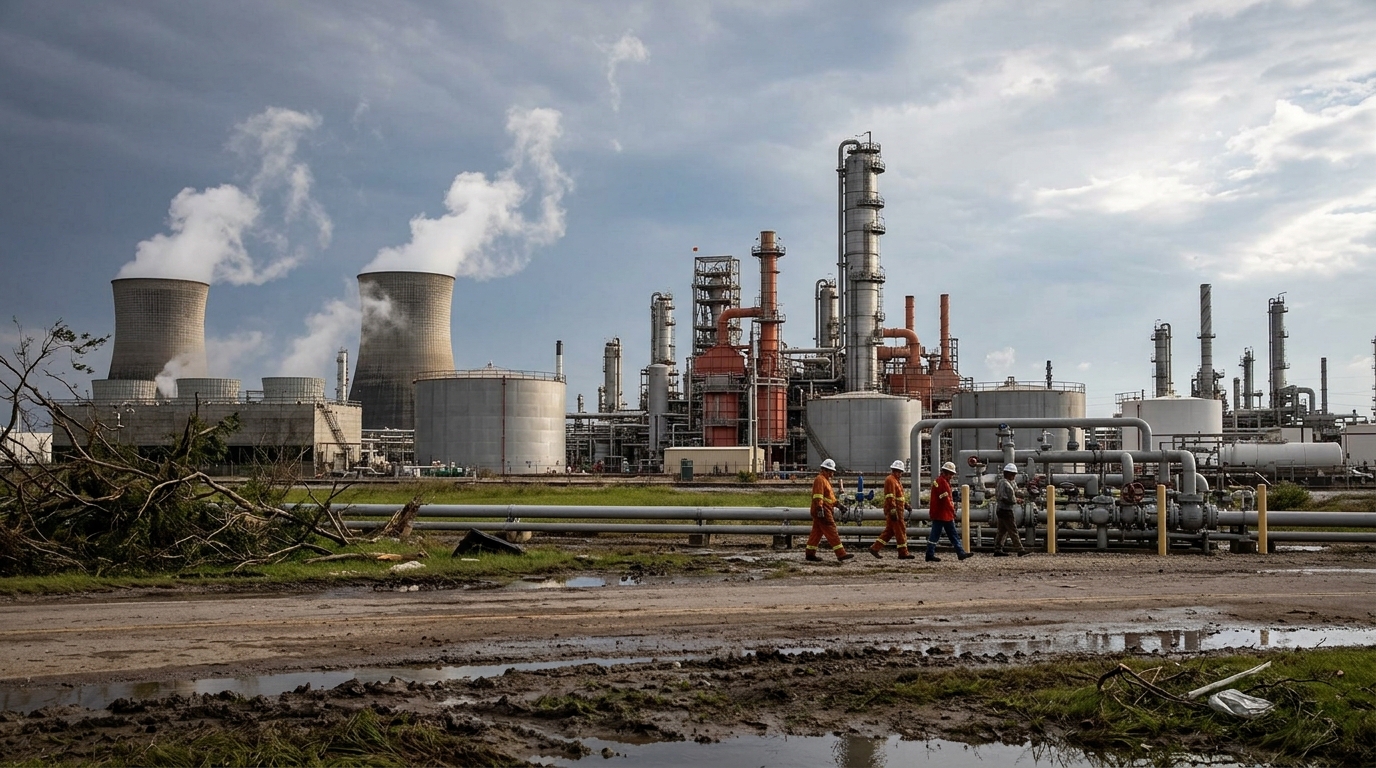
Hurricane Isaias came ashore near Destin, Florida, just before 9:30 p.m. Friday as a Category 2 storm with 105-mph sustained winds and a five-foot storm surge. By early Saturday it was no longer a hurricane as winds continued to drop. The physical storm is largely over. The energy-market story is just beginning, and traders looking at crude oil are watching the wrong thing.
The Asymmetry That Matters
At peak, more than two-thirds of daily Gulf oil production, roughly 1.5 million barrels per day, was shut in as a precaution. Those numbers will reverse fast. Facilities will be inspected once the storm passes, and production from undamaged platforms can return quickly. Damaged facilities take longer, but the industry typically moves quickly on offshore restart. Crude is a temporary interruption.
Refineries are not. Refineries can take considerable time to restart after power outages or flooding because their complex, interconnected systems require continuous power and carefully managed operating conditions. Even with a weaker hurricane, it can take days to a week or more for operations to normalize. That gap between crude recovery speed and refinery recovery speed is where the trade lives.
Certain Gulf Coast Refineries Are the Numbers to Watch
The storm track put Chevron’s refinery in Pascagoula, Mississippi, and the Vertex Energy refinery in Saraland, Alabama, under elevated storm risk. Together those facilities can process roughly 457,000 barrels per day, or about 2.3% of U.S. refining capacity. Damage assessments are underway this morning, and any confirmed flooding or extended power outage at either plant changes the calculus materially.
The backdrop makes even a modest disruption consequential. U.S. distillate inventories, which include mostly diesel, are sitting at multi-decade lows for early October. The Strategic Petroleum Reserve has also been drawn down heavily over the last several years. Recent EIA and Department of Energy reporting put the SPR near 284 million barrels, the lowest level since the early 1980s. There is no buffer.
Andy Lipow of Lipow Oil Associates put it plainly: “Losing any refinery capacity when diesel supplies are already unusually low for this time of year is not a good thing.”
Where the Move Is in Equities
Refiner shares moved ahead of landfall. That was pre-landfall positioning. Today’s open is the real test, contingent on refinery damage reports.
The structural case for VLO, MPC, and PSX was already strong before Isaias formed. In 2026, independent refiners have been among the market’s standout winners as product tightness widened margins. Valero remains one of the more distillate-levered large-cap refiners, while Marathon is among the largest independents by capacity and tends to benefit when utilization stays high and diesel is the scarce barrel.
Note the crosscurrent: on Friday, Trump announced incoming Russian diesel supply. That headline risk is real, but it competes directly with the physical reality of shut refineries and tight inventories. Policy announcements do not rebuild a flooded distillation unit.
Trader’s Action Plan
The priority this morning is damage assessment, not price-chasing. If Pascagoula and the Vertex Alabama plant emerge intact, the crude shut-in story can resolve quickly and refiner shares can fade the storm premium. If either facility reports flooding or extended outages, diesel crack spreads, already elevated into the fall, have room to move further, and VLO and MPC are among the most direct beneficiaries.
Loss estimates for the storm would also rise if a refinery floods, creating a secondary read-through for re/insurance names like Everest Group and RenaissanceRe. Insurance trade publication The Insurer reported that BMS Group raised its insured industry loss estimate to $4 billion to $6 billion before landfall was confirmed. An onshore refinery event pushes that range higher.
Watch the damage reports, not the hurricane track. The storm is already gone. What it left behind is what moves markets today.