June 1, 2026
Ross Just Raised the Bar
June 1, 2026.
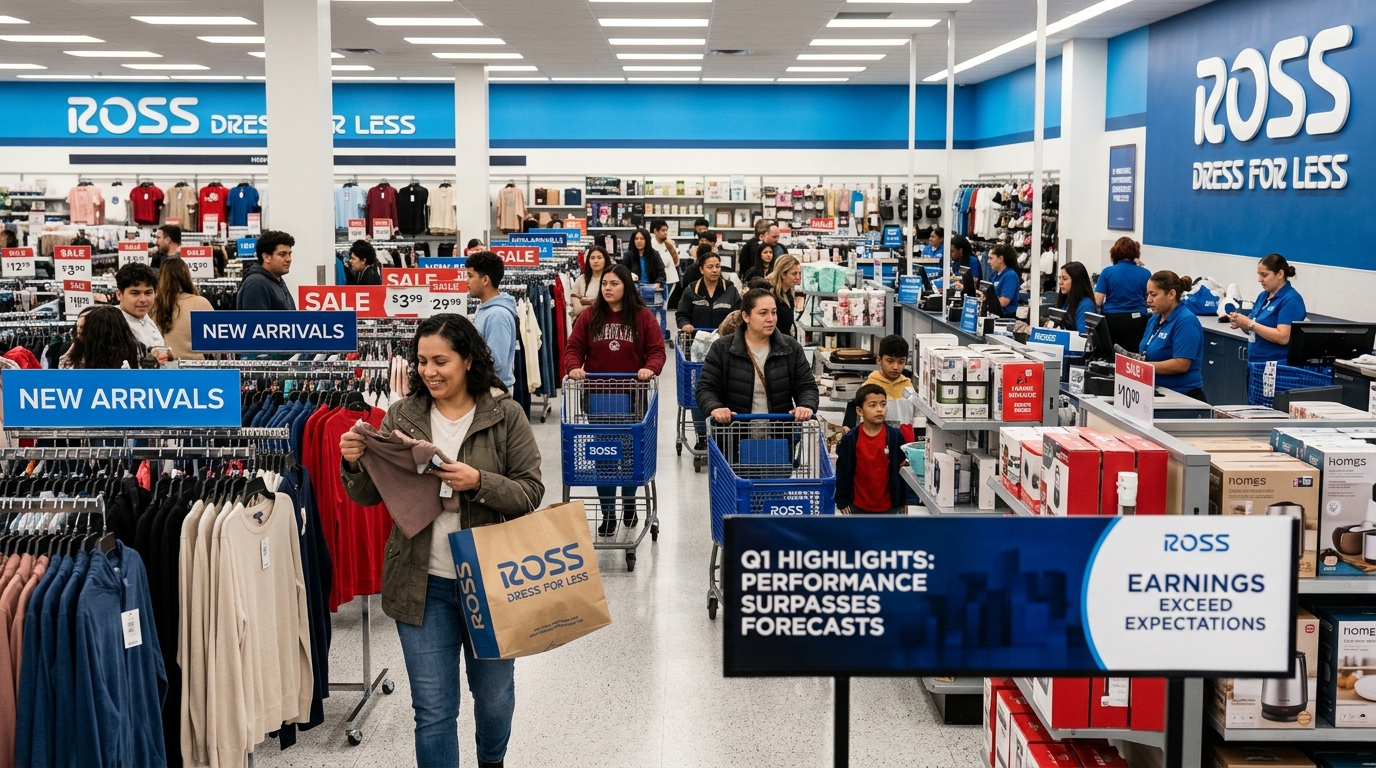
Ross had one of those quarters that looks almost fake at first glance.
Not because off-price can’t do well. Because the combination was unusually clean: big comp, real traffic, margin upside, and then management actually pushed the full-year outlook higher.
And yes, the stock moved for a reason.
Here’s the thing. Strong quarters are common. Quarters that raise the bar for the next two quarters are the ones that change how money behaves.
A major change to U.S. bank accounts could arrive in months.
It may allow closer tracking of your transactions.
What happened (the facts, not the vibes)
Ross Stores reported Q1 fiscal 2026 results on May 21, 2026, for the quarter ended May 2, 2026.
- Net sales: $6.01B, up 21% year over year
- Comparable store sales: +17% (flat in the prior-year quarter)
- Diluted EPS: $2.02, up 37% year over year
- Operating margin: 13.4% (above the company’s prior plan of 11.8% to 12.1%)
The EPS result also cleared Ross’s own prior Q1 outlook of $1.60 to $1.67. That’s the part people skip. Beating consensus is one thing. Beating your own range by that much usually forces a rethink.
What changed next
Management lifted guidance, and they did it in a way that implies they believe the demand is not a one-week blip.
- Q2 fiscal 2026 guide: comps +6% to +7%, EPS $1.85 to $1.93, operating margin 12.8% to 13.0%
- FY fiscal 2026 guide: comps +6% to +7% and EPS $7.50 to $7.74
- Buybacks: $319M spent in Q1; still targeting $1.275B for fiscal 2026 (under a two-year $2.55B authorization)
- Stores: 17 openings in Q1 (13 Ross, 4 dd’s); about 110 planned for the year
What matters is that the Q2 comp guide is still strong. They could have guided conservatively and called Q1 “unusual.” They didn’t.
That doesn’t mean Q1 repeats. It means management thinks demand stays healthy even as the comparisons get tougher.
Very short version: Q1 was big, but Q2 is the real exam.
Elon’s $480 Trillion Currency Masterplan
He’s waited 27 years for this moment. Elon Musk just launched his biggest disruption ever, which could totally reset how millions of people access their money and even pay tax.
Why the market cared
This was not a “price up, units flat” quarter.
Management pointed to higher transaction volume and a double-digit increase in customer count across income levels, ethnicities, and age groups. That’s the kind of detail that usually shows up when the underlying trend is real and they want you to believe it’s not just a value-only customer showing up.
Slight tangent, but it matters: retail investors love margin stories. Institutions love traffic stories. Traffic tends to be harder for competitors to copy quickly, and it tends to be the leading indicator that the brand is taking trips.
Still, I’m not treating 17% comps like the new normal. That’s where people get sloppy. The company itself is telling you to look at 6% to 7% as the more realistic near-term anchor.
Targets moved, but don’t anchor on them
Three recent examples that got attention:
- JPMorgan: Overweight, price target $251 (from $248)
- Citigroup: Buy, price target $261 (from $240)
- UBS: Neutral, price target $232 (from $227)
These are useful as a temperature check, not as a finish line. The real driver from here is whether estimate revisions keep drifting up through June and July.
Author of Get Rich with Dividends Is Giving Away His Ultimate Dividend Package FOR FREE!
Click Here to Get Marc Lichtenfeld’s Ultimate Dividend Package, Including Details on His #1 Dividend Stock… the Safest 9% Dividend in the World… the Top Three “Extreme Dividend” Stocks… and Much, Much More.
Here’s what I’m watching
I want to see if Ross can keep the same feel in the stores without needing a perfect macro backdrop.
- Transactions: does traffic stay the main engine, or does growth lean more on basket size?
- Merchandise flow: can they keep sourcing brand-name product at attractive discounts as peers also chase value shoppers?
- Margins: do they hold low-teens operating margins as comp growth cools?
- Buyback pace: do they stay consistent on the way to the $1.275B fiscal 2026 target?
And one more thing, slightly uncomfortable: after a quarter this clean, the stock doesn’t need bad news to stall. It just needs “good, not great.” That’s why the next update matters more than the last one.
I’m keeping an eye on whether the market starts rewarding the “durability” angle instead of chasing the biggest quarter. That shift happens quietly, then all at once.