
Editor’s Note: Please see the following message from Luke Lango, a former venture capital insider whom TipRanks once ranked the #1 stock picker out of 15,000. He just went public with what he believes could be the biggest recommendation of his career.
Dear Reader,
I’ve NEVER been so convinced of an investment’s potential before…
NOT when I called Nvidia “the cream of the crop” in AI back in 2018, four years before ChatGPT shocked the world…
NOT when I defied the skeptics and backed Tesla in 2019, when everyone thought it was about to go bankrupt…
And NOT when I said “Buy” on AMD before it soared over 26,000%.
If you’ve been sitting on the fence, waiting for the next breakthrough that could turn a small stake into a meaningful payday…
Don’t sit. Don’t wait. Don’t dilly-dally.
Every day, it becomes more and more inevitable. Every day, the profit potential diminishes.
Regards,
Luke Lango
Senior Editor, InvestorPlace
A Coffee-Bean Implant Is FDA-Approved for Arthritis. Now It Is Going After MS.
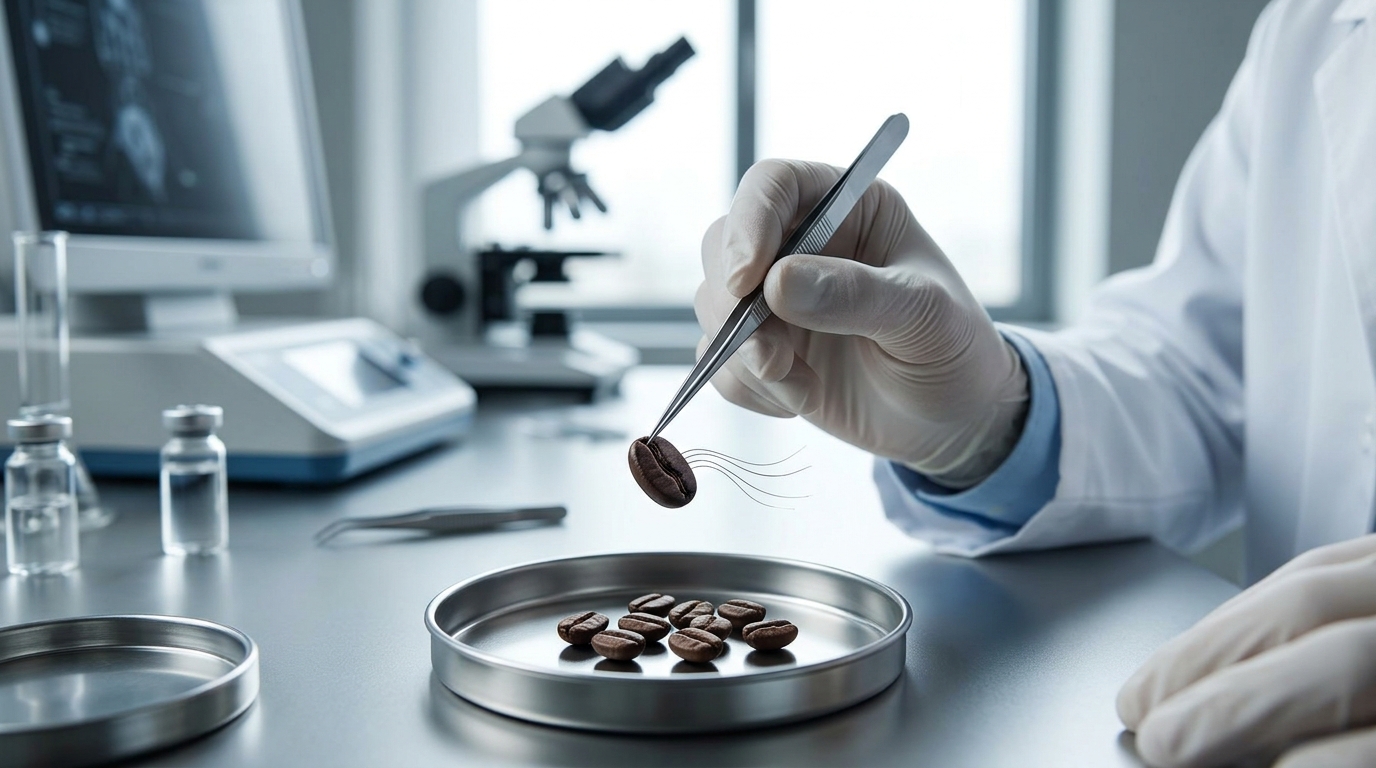
The device that started everything is about the size of a coffee bean. SetPoint Medical’s vagus nerve stimulator, roughly the dimensions of a coffee bean, is implanted in the left side of the neck under general anesthesia during an outpatient procedure. Once in place, it stimulates the vagus nerve for 60 seconds once daily with the goal of activating the body’s natural anti-inflammatory capabilities. The FDA approved it for rheumatoid arthritis on July 30, 2025, and that approval is the clearest signal yet that bioelectronic medicine has crossed from laboratory curiosity into clinical reality.
The pivotal data that got it there is hard to dismiss. Researchers tested the approach in a randomized trial involving 242 people with moderate-to-severe rheumatoid arthritis; after 12 weeks, 35% of those whose devices were activated met the trial’s measure of clinical improvement, compared with 24% in the control group. Those numbers matter because the patients enrolled had already exhausted conventional options.
SetPoint is not stopping at joints. A pilot clinical trial in the U.S. is now enrolling people with relapsing-remitting multiple sclerosis to test the same implantable nerve stimulation device; the trial will enroll up to 60 people, evaluating safety and potential remyelinating effects alongside standard disease-modifying therapies. The MS angle is a different scientific claim entirely. Johns Hopkins neurologist Shiv Saidha notes that while drugs have made strides slowing the rate of new lesions in MS, they do not completely stop lesion development, nor do they promote repair of existing damaged tissue. SetPoint is explicitly targeting that gap.
The multicenter, randomized MS study received Investigational Device Exemption approval from the FDA, and the device has also received Breakthrough Device Designation and was accepted into the FDA’s Total Product Life Cycle Advisory Program. Both designations can speed review if the data holds.
The commercial runway behind all of this is large. One widely cited industry forecast pegs the global bioelectric medicine market at roughly $27.3 billion in 2026 and projects it to reach about $50 billion by 2035. The incumbents, Medtronic, Boston Scientific, and Abbott Laboratories, are at the forefront, each adopting distinct strategies to expand their presence in neuromodulation. SetPoint is privately held and clinical-stage, which means it is building inside a market those giants already partly own.
The most consequential unresolved question is durability. Chronic implantation can trigger foreign body response and scarring, degrading signals over months. Whether the one-minute-per-day stimulation protocol remains effective at year two, year five, or beyond is data that does not yet exist for MS and is still accumulating for RA. Traders watching this space should track the long-term extension readouts, not just the headline trial results. The first approval was the milestone; what comes out of the MS pilot and the ongoing RA follow-up studies will determine whether this is a platform or a single product.