
October 15, 2026
Bonus Content: Southern Company’s $81B Bet Has a Superconductor Problem It Hasn’t Solved
Wall Street has now stopped guessing entirely and started bracing instead. Goldman Sachs and Morgan Stanley have both told clients to prepare for a drop of ten to twenty percent, and that is their base case rather than their worst one. Consumer confidence is falling sharply, yields are spiking, liquidity is thinning out and bearish sentiment has now reached sixty percent. Our free guide explains what that particular combination has historically preceded.
Click here to claim your free guide
P.S. When the institutions that sell optimism start warning clients, it is usually worth reading very carefully what they are actually saying. The free guide summarises all of it plainly, at no cost to you.

Southern Company’s $81B Bet Has a Superconductor Problem It Hasn’t Solved
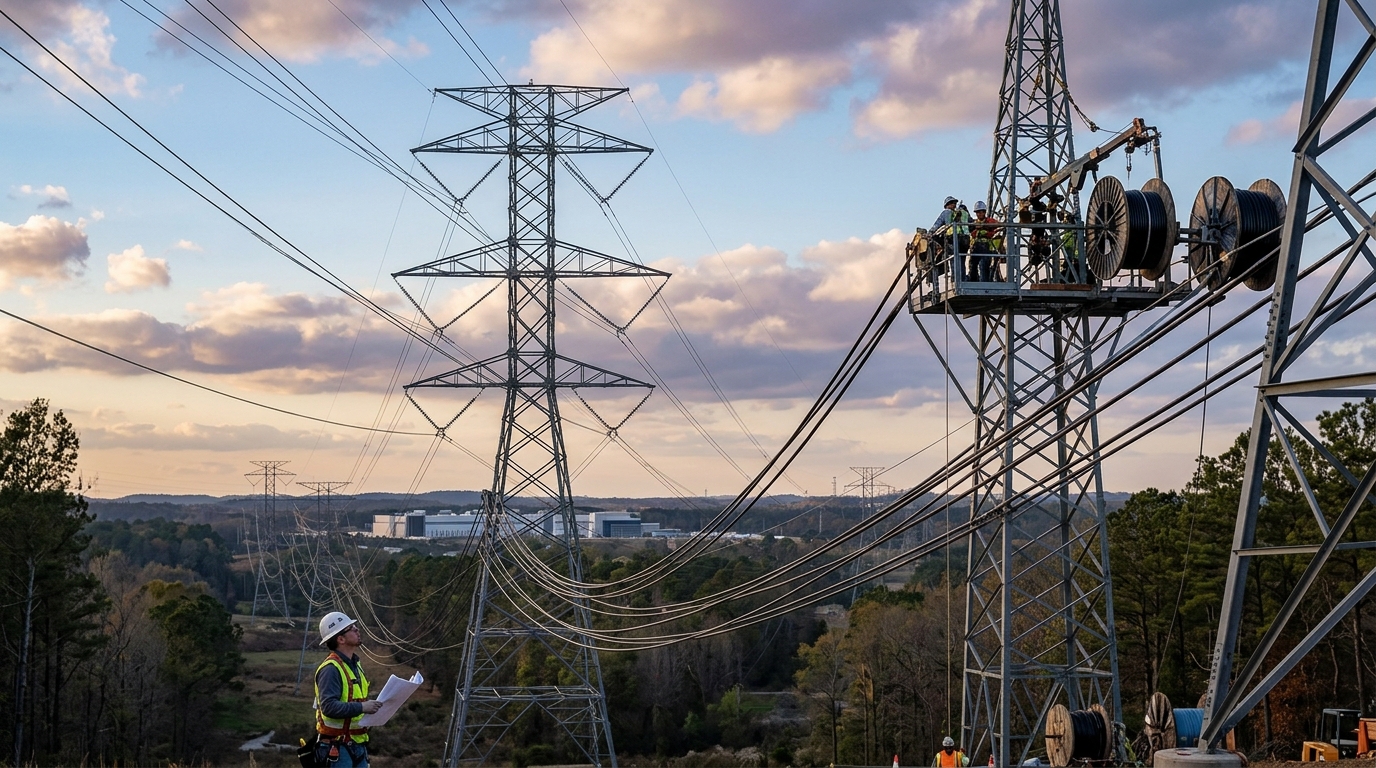
Southern Company is spending money at a pace that would make most utilities flinch. The company raised its five-year capital plan to $81 billion in February 2026, driven by surging large-load demand, and is covering its risk with minimum 15-year contracts for data centers. The growth is real. Southern’s pipeline of potential projects sits above 75 gigawatts, with another eight gigawatts in late stages. What the earnings calls do not address is the physics problem sitting inside that grid build-out.
Conventional copper and aluminum conductors lose meaningful electricity as heat during transmission and distribution. At the load levels Southern is now contracting, that waste is not a rounding error. It is a structural drag on every megawatt-hour delivered to a data center or AI cluster. The solution exists in the lab. Getting it into the ground before competitors lock up the intellectual property is where the real trade lives.
In March 2026, scientists at the University of Houston created a material that conducts electricity with zero resistance at the highest temperature ever achieved under ambient pressure, pushing superconductivity to 151 Kelvin and breaking a record that had stood for more than 30 years. Higher operating temperatures make superconducting technologies far more practical and affordable, which is exactly why utilities paying for long-haul transmission are paying attention.
HTS cables can carry far more current per cross-sectional area than conventional cables, allowing more power to move through the same corridor. More importantly, in the right use case, the energy saved by lower electrical losses can outweigh the energy required to maintain the cryogenic environment. That math is part of what keeps superconducting cables in the conversation, even if most deployments remain limited and highly site-specific.
The listed name closest to this shift is American Superconductor (AMSC). AMSC generates roughly 84% of revenue from its Grid segment, and its Amperium high-temperature superconductor technology is designed to enable compact, high-density, low-loss power solutions for utilities and industrial customers. The company announced a $25 million order from a North American utility in July 2026 and discussed record quarterly revenue in the same reporting cycle. A Microsoft executive published a post in February saying the company was seriously investigating HTS use in its data centers, framing the economics and manufacturing as potentially viable at cloud scale. AMSC stock moved on that disclosure without a single utility announcing a commercial contract.
The power infrastructure buildout extends well beyond any single superconductor play. GE Vernova, Vertiv, and Eaton are collecting the same data-center electrification dollars through turbines, cooling, and switchgear.
The opportunity for SO is different and larger. The Department of Energy closed a $26.5 billion loan package for Alabama Power and Georgia Power on February 25, 2026, supporting projects that include about 16.7 gigawatts of firm, reliable power and roughly 1,300 miles of transmission and grid enhancement work. That transmission mileage is where next-generation cables could enter the conversation. In congested deployments, HTS is already argued to be cost-competitive with conventional conductors on a whole-system, lifetime-cost basis, and costs are forecast to fall further as conductor volumes increase.
SO shareholders are buying a regulated earnings story. The superconductor angle is not priced into the stock. Watch AMSC as the pure-play signal, and watch Southern’s transmission capital allocations for the first sign that near-zero-loss lines are moving from research budget to rate base.