
July 8, 2026
One Sentence. Two Markets.
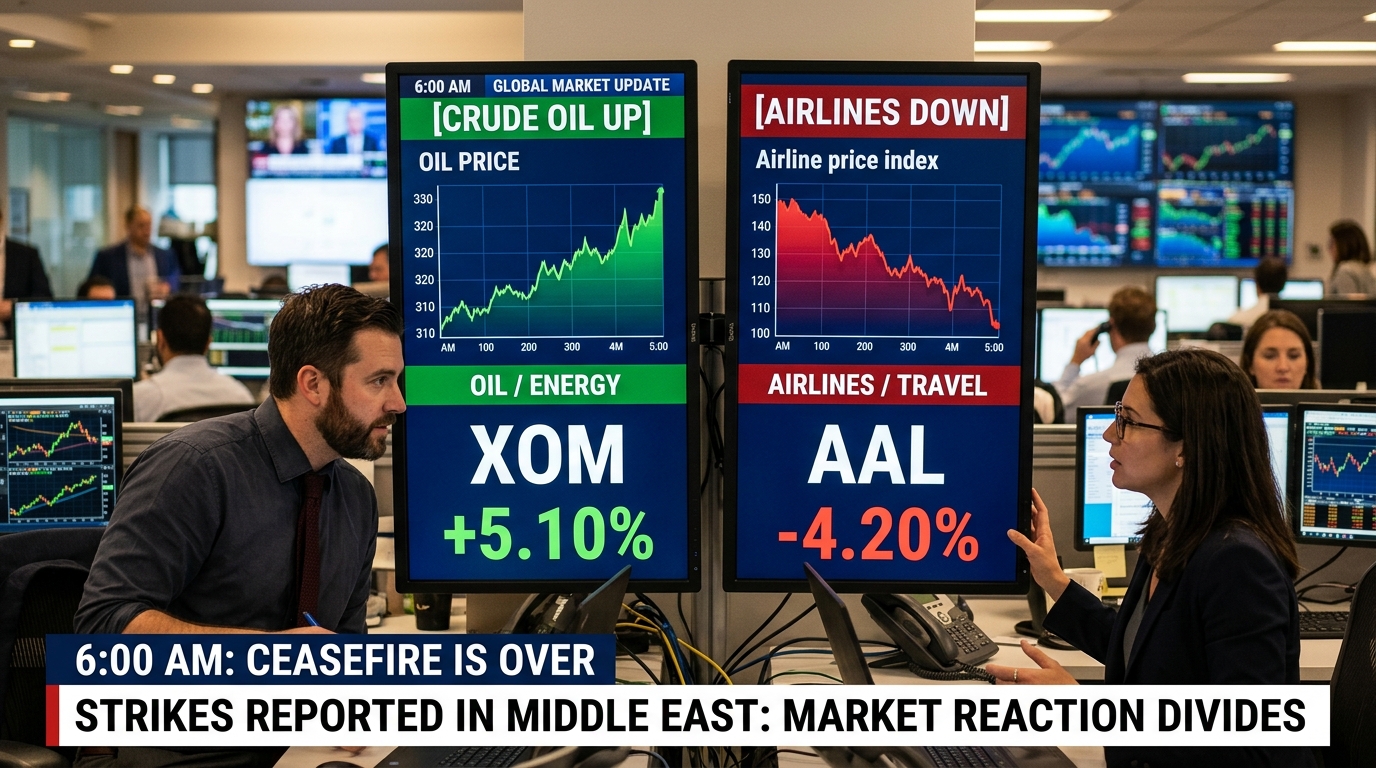
Oil surged 6% while airline stocks bled. The same words caused both.
First a note from Weiss Ratings
Dear Reader,
Tomorrow morning a small group of investors will get a text message…
From a secure app on their phone.
It could come as early as 9:30 a.m.
The app is a direct link to possibly the world’s most powerful stock rating software.
Every time it sent a message…
The average gain was 310%.
And that includes the times it missed.
The folks on this exclusive list have seen almost 3,000 chances to double their money…
And over 400 chances to 10x their money.
This next message could do the same thing…
But right now…
You won’t receive this text message.
Click here to learn how to sign up for these alerts
Chris Graebe
FEATURED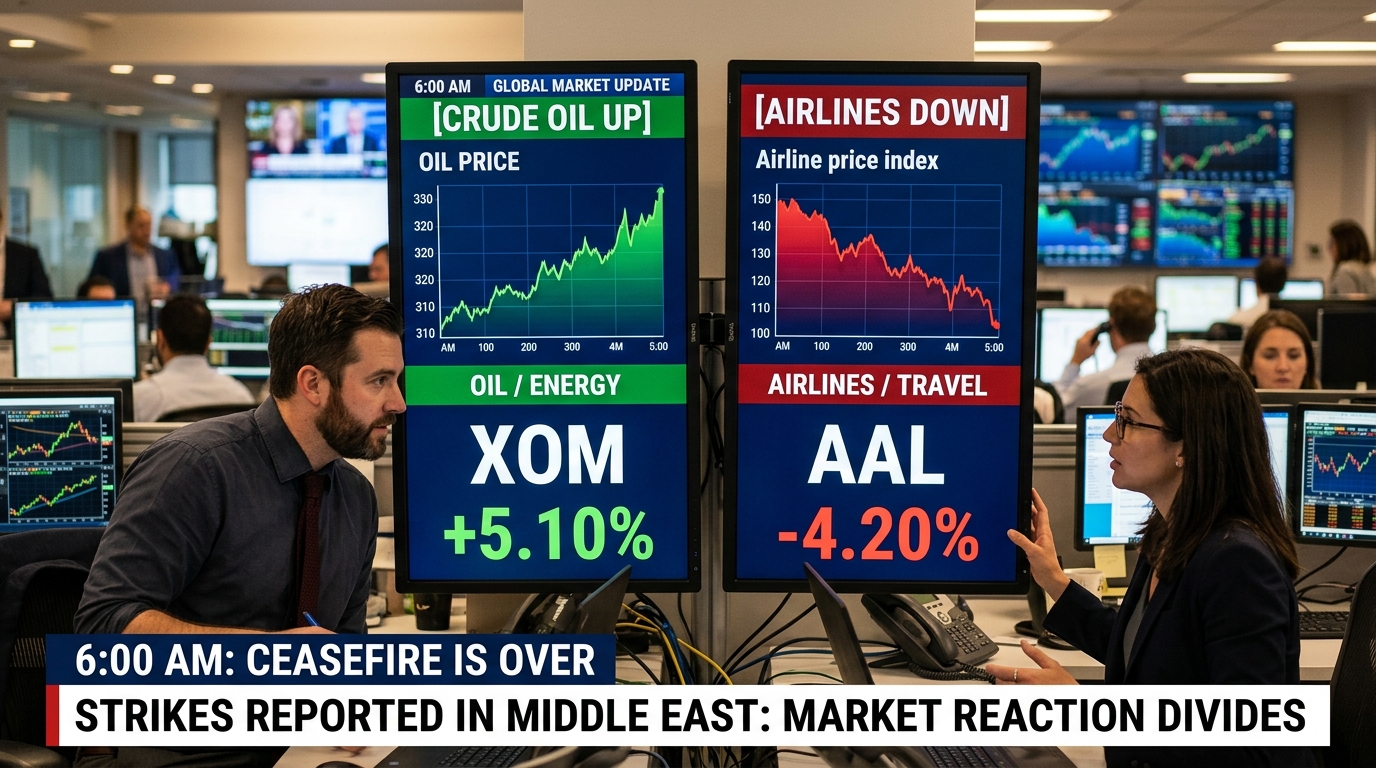
One Sentence. Two Markets.
“To me, I think it’s over. I don’t want to deal with them anymore.”
That’s what Trump said Wednesday morning on the sidelines of the NATO summit in Ankara, standing next to NATO Secretary General Mark Rutte. Asked whether the memorandum of understanding with Iran was dead, he confirmed it. Then he said he might hit Iran “hard” again tonight.
Markets didn’t wait for clarification.
Brent crude surged more than 6% to nearly $79 a barrel. WTI jumped 5.5% to around $75, its biggest single-session move higher since early June. The Dow fell more than 600 points. The S&P 500 dropped roughly 0.9%. The Nasdaq gave up close to 1%. This came one day after US forces carried out what Trump described as “20 to 120 times tougher” retaliatory strikes on Iran, following attacks on commercial vessels in the Strait of Hormuz, including a Qatari LNG carrier and a Saudi oil tanker. Tehran said it had targeted 85 US military sites in Bahrain and Kuwait in response.
What happened in the sectors underneath all of that is what actually matters for your portfolio right now.
The 7 Things I Wish I’d Known Sooner
I’ve been trading for over 50 years. In that time, I’ve made every mistake an options trader can make – and watched plenty of other people make them too.
Here’s what I learned: the losses you regret most almost never come from a lack of knowledge. They come from skipping a step you already knew to take.
So, I wrote down the 7 steps that matter most. On one page. Run it before any options trade.
It’s called the Smart Trade Options Checklist. Normally $29.97. Free today.
The Split
This is not a broad selloff. It is a forced rotation, playing out in real time, with clear winners and clear losers sitting right next to each other on the screen.
On the energy side: ExxonMobil, Chevron, and ConocoPhillips all gained between 2% and 3% in early trading. Devon Energy, Occidental Petroleum, and Diamondback Energy moved up 2.5% to nearly 4%. Meanwhile, United Airlines dropped more than 4%. Delta and Southwest both fell more than 3%. Carnival, Royal Caribbean, and Norwegian Cruise Line each shed between 2.5% and 3.2%.
Same morning. Same headline. Opposite outcomes.
The reason is brutally mechanical. Jet fuel tracks crude oil. Airlines had been quietly rebuilding after the mid-June MOU stabilized oil around $68 to $70 a barrel for nearly three weeks. Goldman and TD Cowen had just raised price targets on Delta, United, and Southwest as recently as July 2. Second-quarter jet fuel was tracking around $4.10 to $4.30 per gallon heading into earnings season. Those estimates were built on oil staying calm. Today, oil is no longer calm.
Worth noting: two weeks ago, when WTI dropped 4% to a 3.5-month low as tankers began transiting Hormuz with their signals on, airline stocks ripped higher, with UAL and American up more than 6%, Delta up over 4%. That same binary trade just flipped back the other direction this morning. The sector is essentially a leveraged bet on one thing: is the strait open or closed.
What Three Weeks of Calm Built
Context here is important. After the US and Iran signed their memorandum of understanding in mid-June, something unusual happened: markets actually started to believe it. Oil held in that $68 to $70 range. Travel stocks recovered. The Dow hit a record above 53,000 just last Monday. The S&P 500 wrapped Q2 with its strongest quarterly performance since 2020. There was a real sense that the worst of the energy shock was behind us.
One press conference unwound a meaningful portion of that in about 45 minutes.
“For markets and the global economy, the prospect of a swift return to pre-conflict energy and goods flows through the waterway is fading,” BNY senior market strategist Geoff Yu said Wednesday. The renewed conflict, according to Trading Economics, “raised the prospect of fresh disruptions to global energy supplies by deterring shipowners and regional producers from using the vital waterway.”
Slight tangent, but it matters: the US also revoked the waiver that had been allowing Iran to export oil globally. That happened Tuesday, before Trump’s comments even landed. So the oil move today is not purely sentiment. There is a structural supply piece underneath it too.
564% or higher when the market doesn’t move?
There’s a program with a history of finding stock winners… on the market’s quietest days.
Feb. 18, 2025, was a day of no action.
Yet this algorithm recommended a stock that went up 610%.
Oct. 18, 2021, was another boring day.
But this software recommended a 564% winner that day.
April 10, 2023?
Another tame day, another big win.
790% since then in fact.
So how did it do it?
The Fed Piece Nobody Wants to Think About Right Now
Here is where things get genuinely complicated.
The Fed’s June meeting under new Chair Kevin Warsh was already hawkish. The committee held rates steady at 3.50% to 3.75% in a unanimous vote, but the dot plot showed 9 of 18 officials now project at least one rate hike before year-end. That was a dramatic shift: back in March, not a single official had penciled in a 2026 hike. The median PCE inflation forecast was revised up sharply to 3.6%. The median rate outlook moved to 3.8%.
The FOMC minutes from that June 16-17 meeting drop today at 2 p.m. ET. Traders were already swinging harder toward a rate hike coming this year, potentially as early as the October meeting, per CME data cited by Yahoo Finance this morning. A September hike had been sitting at roughly 50 to 55% odds heading into today. That number is almost certainly moving higher right now as oil climbs.
For growth-heavy stocks, this is the squeeze from two directions at once. Energy inflation from below pushing costs up, rate expectations from above compressing multiples. That combination is what hit semiconductor stocks hard on Tuesday, with a gauge of chip firms sinking more than 4.5%. AI infrastructure stocks are expensive at current valuations. They do not need the Fed turning more hawkish at the same moment energy costs are re-accelerating.
Warsh said inflation “prices are too high” as recently as July 1 at the ECB Forum in Sintra. He hasn’t blinked. Today’s oil move gives him even less reason to.
Where the Money Is Going
The energy supermajors are the obvious beneficiaries. ExxonMobil’s Permian Basin operations, expanded massively through its $60 billion Pioneer acquisition in 2024, produce at costs well below current WTI levels. ConocoPhillips operates purely in upstream exploration and production, meaning its earnings move almost one-for-one with oil prices. No refining margin drag, no downstream exposure. At $75 WTI, the pure-play E&P model looks compelling. WTI peaked at $114 in April when the Hormuz closure was at its worst. Brent hit a 52-week high of $126.41 around that same time. There is runway here if the conflict deepens.
The losers, as mentioned, are easy to identify. Less obvious is how much of the pain actually flows through to earnings. Delta reports Q2 results Thursday, July 10. United already reported after close Tuesday. How airlines describe their fuel hedging strategies in these calls will be closely watched. The degree to which they locked in fuel costs below current levels determines whether today’s move hits Q3 guidance or just spooks the stock temporarily.
Three Things to Watch Into the Close
- FOMC minutes at 2 p.m. ET today — markets will parse every line for clues on how many of the nine hawkish dots belong to actual voting members. If several are non-voting regional presidents, a September hike coalition is smaller than the dot count implies. If voting members were pushing to hike in June itself, that’s a more urgent read.
- Tanker tracking data — before the conflict, roughly 20% of global energy supply transited the Strait of Hormuz. Real-time AIS transponder signals from vessels in the strait are the most honest indicator of whether today’s escalation is a 24-hour event or a structural re-closure. Two weeks ago, vessels transiting with their signals on was the signal that sent airlines up 6%.
- June CPI on July 14 — six days away. May CPI already came in at 4.2% year-over-year, the highest since April 2023. A hotter June reading, layered on top of today’s oil surge, would meaningfully reset rate-hike probabilities heading into the July 28-29 FOMC meeting. That is the next hard deadline for this trade.
The IMF downgraded its 2026 global growth forecast to 3%, down from 3.5% in 2025, citing the energy shock from the Iran conflict. That forecast assumed the strait reopens later this month. That assumption just got a lot shakier.
Three weeks ago the market was pricing a gradual return to normal. This morning it’s unwinding that. The real question isn’t whether energy stocks go higher today — they probably do. It’s whether this is a two-day headline or the start of something that rewrites the second half of 2026’s earnings picture.
Look at the spread between XOM and UAL right now. That gap is the market’s honest answer to the question. And so far it hasn’t decided.
For informational purposes only.