
Nobody was expecting that number.
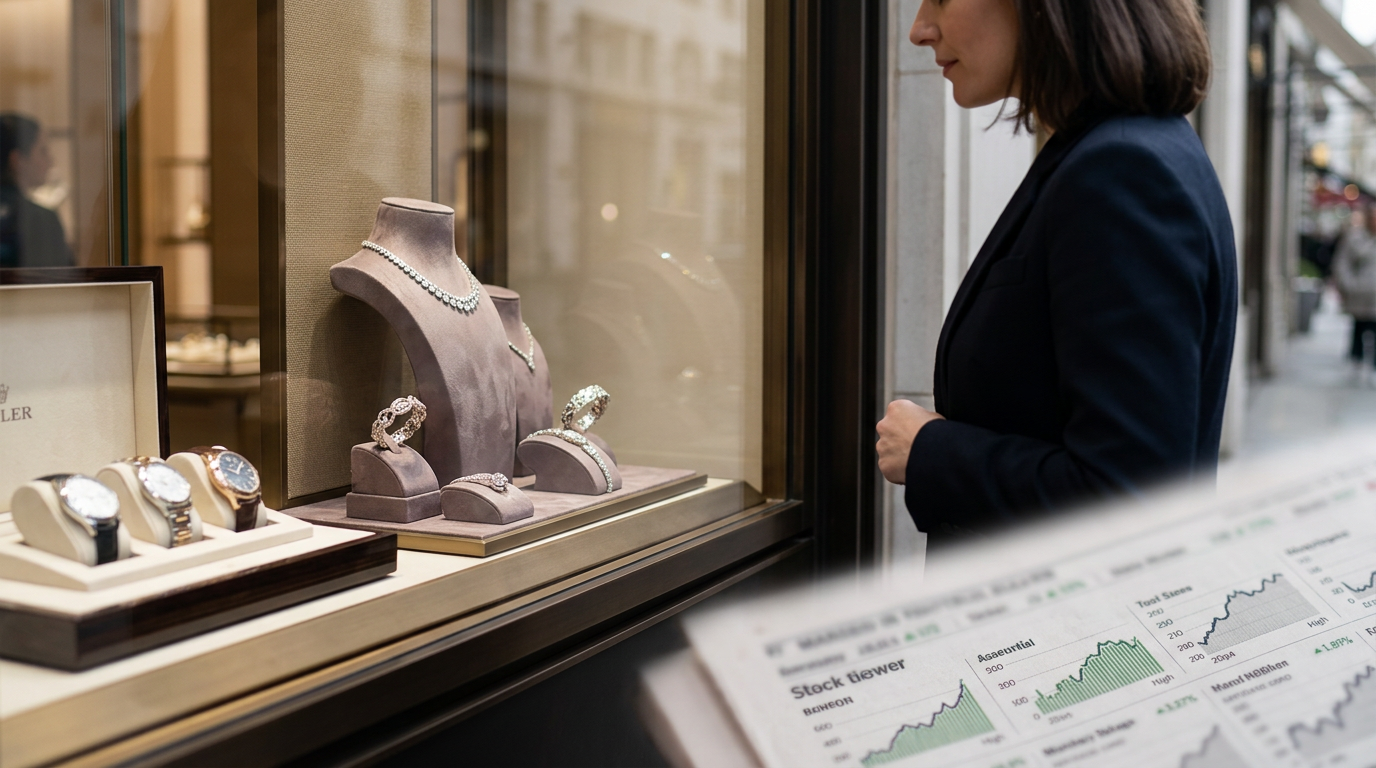
Richemont, the Swiss group behind Cartier and Van Cleef & Arpels, reported first-quarter sales of $7.24 billion on Wednesday, up 20% at constant exchange rates. Analysts had forecast around $6.7 billion. One analyst called the result “flabbergasting.” That word is doing real work here.
The jewelry division alone grew 24% in a single quarter. That’s seven consecutive quarters of double-digit growth for Richemont’s most important business, and it happened at a time when the sector was broadly expected to be crawling through a recovery, not sprinting.
Shares of Richemont jumped about 6% in early trading on the news. But the more interesting move was what happened across the rest of the space. The Stoxx European Luxury index climbed 2.5% in a single session, and other major luxury names moved higher as well.
That kind of correlated move tells you something. The market had been discounting the entire sector as a slow-motion recovery story. Richemont’s quarter just introduced some doubt about that consensus.
The LVMH Question
LVMH, the world’s largest luxury company, reports its first-half 2026 results on July 27. That date now matters a lot more than it did a week ago.
Here is the context you need. LVMH came into Q1 2026 with a mixed report, organic growth of just 1%, with a 7% negative currency impact and a roughly 1% negative impact from the Middle East conflict. Asia excluding Japan was the bright spot at 7% organic growth. The Americas posted 3% growth. Europe and Japan both fell.
The stock has been trading at a substantial discount to its historical earnings multiples. HSBC has reiterated a Buy rating in recent weeks. But specific recent Buy reiterations from UBS and RBC could not be independently verified. The situation heading into July 27 is one where expectations are not particularly elevated, the comparison base from a year ago is soft, and a competitor just posted one of the best quarters the sector has seen in years.
Richemont also said its Asia Pacific region saw strong growth in the quarter. That matters because China has been the central worry for all of these businesses. If that improvement is holding, the LVMH result on July 27 could read very differently than what the market priced in April.
Why Jewelry Is the Right Frame
The part of Richemont’s result that stands out is not just the growth rate. It’s where the growth came from.
Hard luxury, meaning jewelry and high-end watches, has proven more resilient than soft luxury like fashion and leather goods through this cycle. The customers buying a $60,000 Cartier bracelet are not the same customers who paused on a $2,500 handbag. The aspirational buyer pulled back. The ultra-wealthy did not.
That distinction is important for reading LVMH’s position. Its fashion and leather goods segment, which includes Louis Vuitton and Dior, generates around 75% of operating profit. That business has more exposure to the aspirational buyer than Richemont does. The read-through from one to the other is not one-to-one.
Still, the macro backdrop Richemont described, improving trends in Asia and solid Americas, is the same backdrop LVMH is operating in. If anything, an easing in Middle East-related disruption could be a meaningful positive for LVMH, given how significantly that conflict weighed on its Q1 numbers.
The Risk Nobody Is Talking About
Currency. It is an unglamorous topic but a structurally relevant one right now. The euro has been trading near multi-year highs against several key currencies. That creates a translation headwind that shows up every quarter in LVMH’s reported revenue, even when organic growth is solid.
There is also the China question, which never fully resolves. Sales in mainland China are showing improvement, but the recovery is not linear and the comparison base from a reopening surge in 2023 created a tough comparison cycle that is only now easing. LVMH’s Q2 will be the first quarter where those comps get meaningfully easier year over year.
Deutsche Bank noted after Richemont’s quarter that better-than-expected results, combined with lower gold prices, are likely to drive meaningful upgrades to sector earnings forecasts. That upward revision cycle, if it materializes, is the mechanism through which these stocks re-rate.
Luxury is not cheap. But it is cheaper than it was, and one of its most important names just delivered a result that turned the conversation around. July 27 will tell us whether that conversation extends to the whole sector, or stops at the jewelry aisle.
This article is for informational purposes only and does not constitute investment advice. All investments carry risk, including the potential loss of principal. Past performance is not indicative of future results.