September 1, 2026
Bonus Content: JPMorgan Just Blinked. Goldman Is Holding the Other Side.
Editor’s Note: Famed $1 billion fund manager Louis Navellier has informed us that his system recently assigned an A rating to a tech company that’s popular with both Elon Musk and President Trump. In his new presentation, Louis gives away the name and ticker symbol of this firm for free. Click here to watch it now, or read below for more details.
Dear Reader,
When this struggling PC maker went private in 2013, many were skeptical.
Forbes wrote that the CEO’s track record “does not inspire confidence in the company’s future.”
And according to the New York Times, private equity giant BlackStone withdrew a bid after “discovering that [its] business was deteriorating faster than previously understood.”
But its business didn’t deteriorate. It transformed.
And when it returned to the public markets, it was no longer just another computer company.
It had acquired all the software and hardware to become – as the Wall Street Journal put it – “a globe-straddling AI-supercomputer builder.”
That’s why, when Elon Musk set out to win the AI race, this firm was the first company he called.
That said, no one is a bigger fan of this company than President Trump.
He’s repeatedly told crowds to buy this firm’s flagship product…
Awarded it a five-year, $9.7 billion Pentagon contract…
And personally invested up to $5 million in its shares.
This company is the comeback story of the century – and it’s only just beginning.
My system recently assigned it an A rating…
The same rating Comfort Systems, Supermicro, and Applovin received before they soared by as much as 1,117%, 2,007%, and 1,863%, respectively.
Over the years, I’ve poured over $9 million into building and maintaining this system, and it’s rarely failed me.
Nevertheless, timing is everything.
Trump, Elon, and this company are rapidly building out an AI infrastructure that will secure our country’s dominant position in the global economy for decades to come.
And on September 3, I believe a major event will occur that could bring the magnitude of this plan to light.
If you don’t get on the winning side of this shift before that date, you run the risk of missing out entirely.
Regards,
Louis Navellier
Senior Analyst, InvestorPlace
P.S. No e-mail, credit card, or subscription is required to access this pick. Click here to view (must act before September 3)…
JPMorgan Just Blinked. Goldman Is Holding the Other Side.
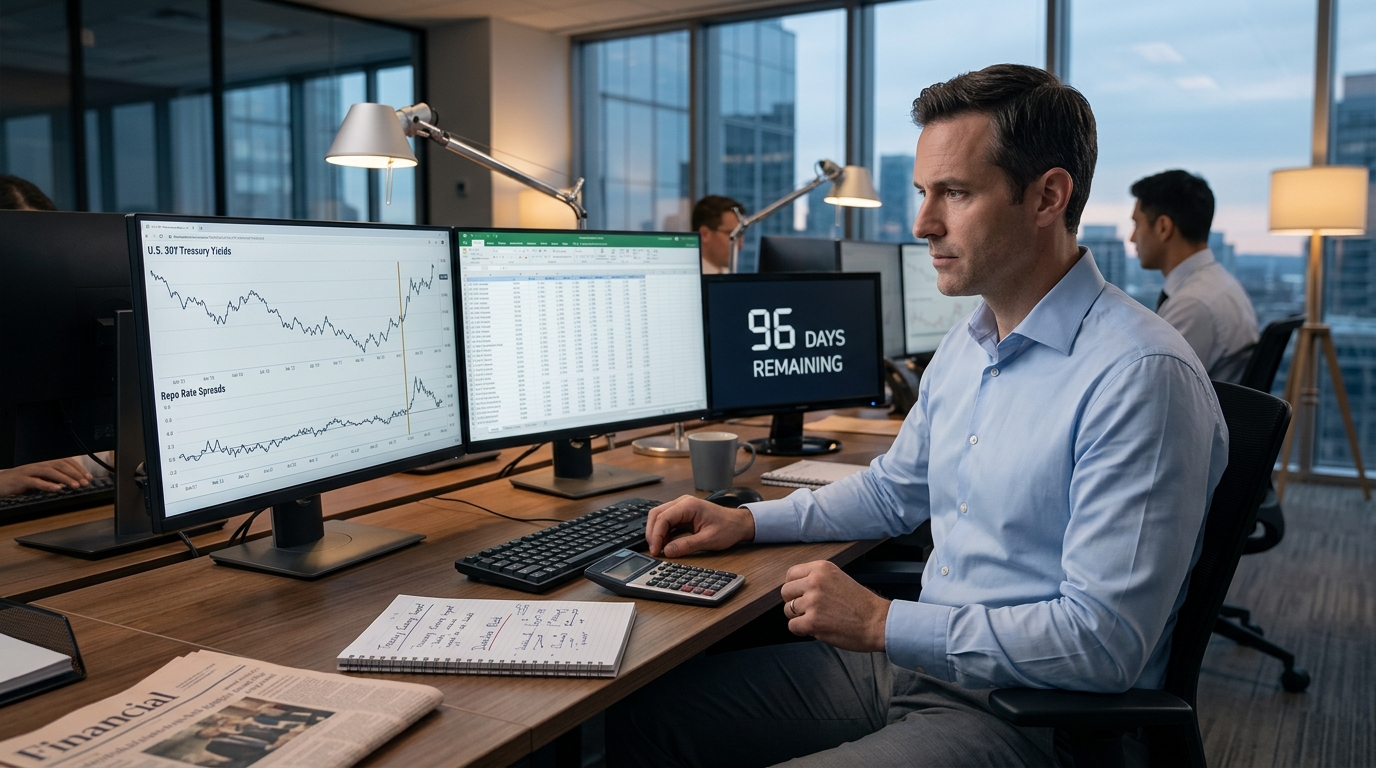
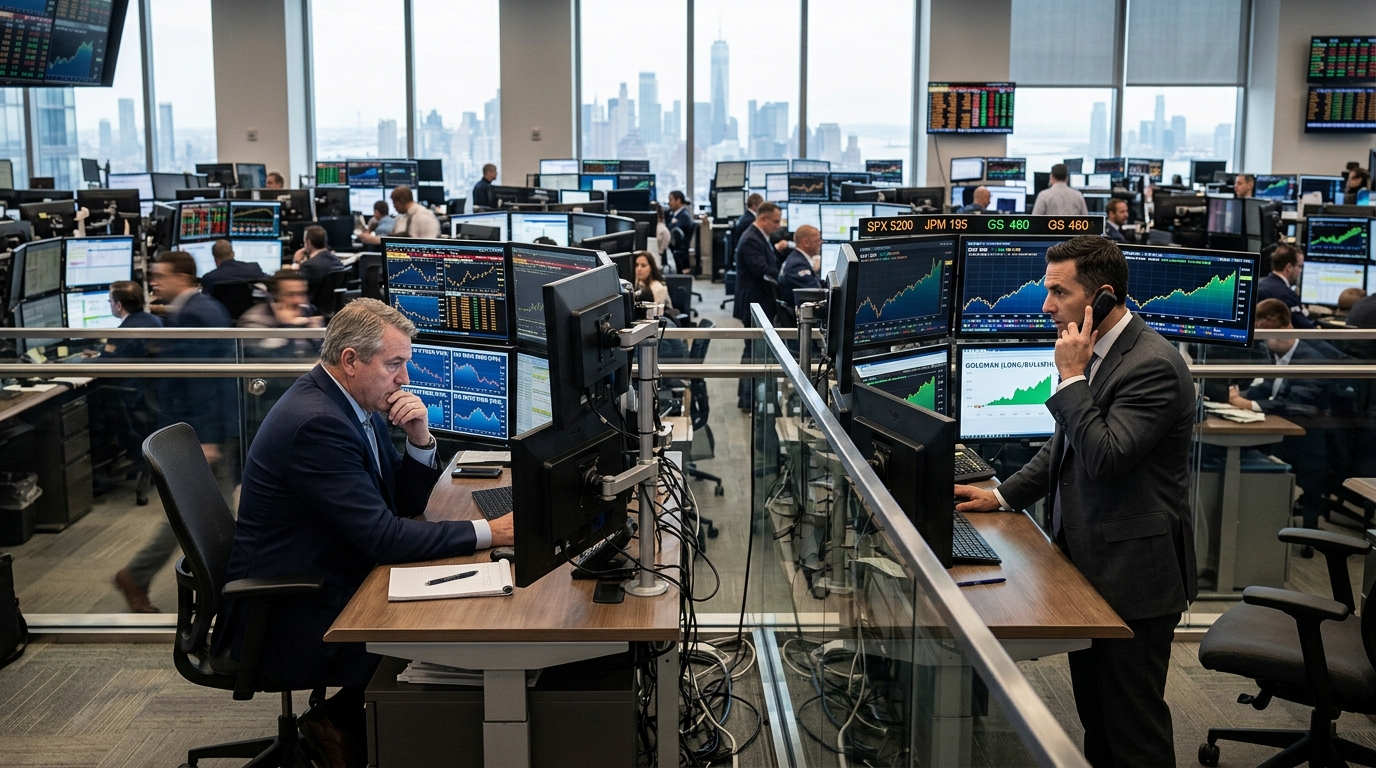
Two of Wall Street’s most-watched trading desks are now positioned directly against each other heading into the September 15-16 Fed meeting, and which side you take is the most consequential positioning decision of the month.
JPMorgan moved first. JPMorgan’s market intelligence team shifted to a “tactically cautious/neutral” view on US stocks after hawkish remarks by Fed Chair Kevin Warsh pushed markets to boost rate-hike bets, with Andrew Tyler’s team stepping back from a bullish stance ahead of the Fed’s September 16 policy decision. The 10-year Treasury yield rose to about 4.75% Monday, swaps were pointing to roughly a 60% chance of a quarter-point hike, and the S&P 500 was lower by roughly 0.5% around midday in New York. Tyler’s signal here matters: he turned cautious in early June before a multiweek decline in stocks.
The catalyst is Warsh’s Jackson Hole appearance last Friday. Warsh used his Jackson Hole appearance to remind markets that the central bank isn’t done fighting inflation, and market-implied odds of a September rate hike moved higher after his remarks. The sum of his remarks caused a sharp shift in hike probabilities, with markets leaning toward a hike for the September 15-16 meeting, according to the CME FedWatch tool.
JPMorgan Wealth Management had already broken from its 2026 hold call before Friday’s speech. Wealth Management strategists shifted to forecasting a 25-basis-point Fed hike at the September meeting, departing from their prior base case of no rate changes in 2026. Two drivers lowered the bar: continued supply-chain shocks tied to the Iran conflict keeping energy costs elevated, and increased investor doubt about the Fed’s willingness to contain inflation after it held rates in July.
Goldman is not moving. Goldman Sachs chief economist Jan Hatzius still expects the Fed to hold in September, arguing Warsh’s hawkish Jackson Hole remarks raise hike odds only if August CPI and PPI surprise to the upside, which Goldman does not expect. If Hatzius is right that core CPI and PCE will print around 0.2% for August, that would be broadly consistent with recent trend inflation rather than the acceleration Warsh signaled he needs to see, likely disappointing traders who pushed hike odds higher on the speech alone. Goldman’s broader position: “We still think market pricing for the funds rate is too hawkish.”
The FOMC itself is divided in a way that makes the outcome genuinely uncertain. The committee held its federal funds target at 3.50-3.75% in July, but three of the 12 voting members, Beth Hammack, Neel Kashkari, and Lorie Logan, already wanted a 25-basis-point increase, with the decision to hold passing 9-3. Warsh has spoken sternly on the Fed’s inflation mandate before, stressing the Fed’s commitment to returning inflation to 2%, even as markets have sometimes questioned how the committee will react to incoming data. Treasury Secretary Scott Bessent pushed back Monday, saying that raising into a supply shock is inadvisable absent clear second- or third-order effects, and that core inflation has remained restrained.
Where This Leaves Traders
September has become a crowded risk window: a live Fed meeting, key CPI data, heavy post-Labor Day credit issuance, and weak seasonality are all arriving at once. The JPMorgan desk is not predicting a collapse. It is “tactically cautious/neutral,” anticipating choppy, sideways trading even as underlying fundamentals remain supportive. That is a short-window call on volatility, not a structural bear view.
The August CPI release, due September 11 ahead of the September 16 decision, is the fulcrum. A reading that prints in line with Goldman’s 0.2% monthly expectation validates the hold thesis and likely unwinds a chunk of the hike premium baked into yields and equity vol. A surprise to the upside, particularly in shelter or services, flips the calculus and hands JPMorgan’s caution trade a clean run. Position sizes should reflect that binary, not the current consensus.