What are you hiding in Fremont Elon???
At a recent shareholder meeting…
Elon Musk announced the END of Model S and X production lines at Tesla’s Fremont Factory…
So that they can convert them into a 1 million unit per year line of ‘Elon’s iPhones’.
A breakthrough technology that will shock the world and generate “INFINITE PROFITS” for Tesla, according to Elon.
And he said the new “production-ready” version could be revealed as soon as October 21st.
But according to Matt Monaco, the legendary tech investor who turned $2k into $3 MILLION trading mega trends like this early…
If you ONLY buy shares of Tesla…
You could be missing the most lucrative part of this new opportunity.
Matt’s pinpointed 5 tiny companies that could ride the coattails of ‘Elon’s iPhone’ when it goes mainstream.
(2 of the 5 stocks are trading for less than $4 per share as of this writing.)
But who knows how HIGH they could fly when this goes mainstream!
So there’s no time to waste…
Iron and Sodium Are Winning Grid Deals Lithium Can’t Touch
Lithium-ion still accounts for the overwhelming majority of grid storage deployments under four hours. That position is structurally secure for short-duration frequency regulation. What it cannot do, economically, is stretch to the multi-hour and multi-day discharge windows that grid operators now increasingly need. That gap is where iron and sodium are winning real money.
The U.S. power system ended 2025 with 43.6 gigawatts of utility-scale battery storage online, and in just the first six months of 2026, operators added another 8.3 gigawatts, pushing total capacity to nearly 52 gigawatts. Almost all of that is lithium. But the contracts being signed at the margin tell a different story.
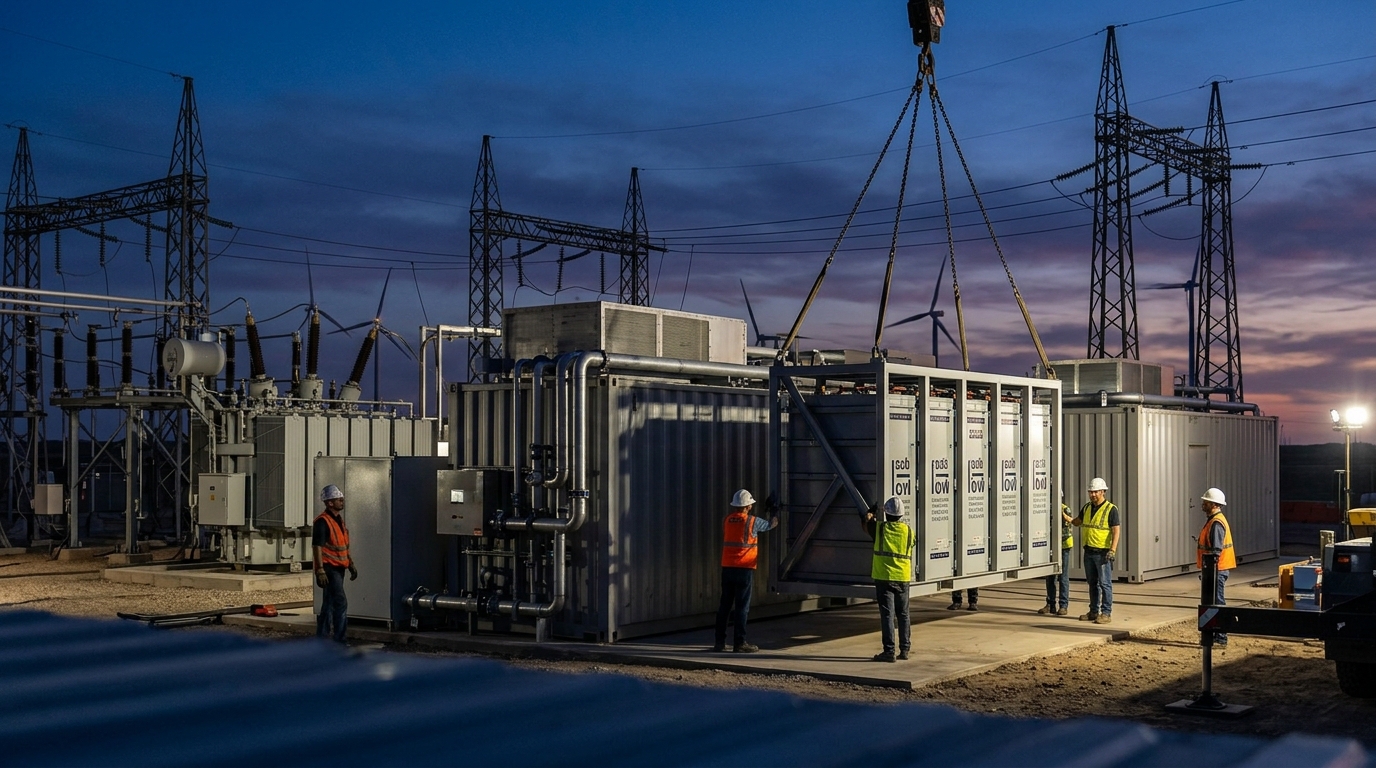
Form Energy is moving ahead under an agreement with Georgia Power to deploy a 15 MW/1,500 MWh iron-air battery system in Georgia, with the multi-day system targeted to come online as early as 2026, subject to regulatory approvals. Form Energy has said its iron-air batteries are designed for roughly 100 hours of discharge, and the company has publicly targeted an all-in installed cost in the $15 to $20 per kWh range at scale. By contrast, all-in grid-scale lithium-ion systems have historically landed in the low-to-mid hundreds of dollars per kWh when balance-of-system and construction are included, depending on project type and vintage. That cost gap, if validated at scale, rewrites the economics of multi-day backup entirely.
Sodium is moving faster commercially. ESS Tech CEO Drew Buckley described Q2 2026 as an inflection point, saying demand for sodium-ion is unlike anything in the company’s history, with early-stage opportunities approaching $1 billion across data centers, critical infrastructure, and utility markets following ESS’s letter of intent with Alsym Energy and the rollout of its Bridge modular sodium-ion system. The global sodium-ion battery market was valued at about $1.83 billion in 2025 and is projected to grow from about $2.24 billion in 2026 to about $7.08 billion by 2034, roughly a 15.5% CAGR.
The procurement logic driving both chemistries is not purely technical. Pressure is building for longer-duration storage, safer chemistries, and more resilient supply chains in the face of AI-driven load growth, data center demand, wildfire risks, and tightening foreign-entity-of-concern and domestic content rules. China currently dominates much of the global battery supply chain, including cells and many upstream materials, and tariffs and compliance constraints tied to Chinese-linked supply can increase procurement friction and costs for energy storage projects. That FEOC pressure alone is pushing utility procurement teams to look past lithium for contracts that extend into the 2030s.
California is also funding and advancing vanadium flow storage through state programs, including awards for vanadium flow battery projects in 2025 and 2026. Vanadium redox flow batteries offer a structural advantage lithium cannot replicate: a flow battery’s energy capacity is set by tank size rather than electrode inventory, and the system does not face the same kind of fixed, cell-by-cell capacity fade profile that forces lithium projects to plan for material degradation over time.
None of this topples lithium tomorrow. But the contracts being written now for delivery in 2028 and beyond are increasingly specifying durations that only iron and sodium can fill at defensible cost. The mineral race for grid storage has a second bracket, and it is already underway.