August 11, 2026
Riot Platforms Just Became a Landlord
A $9.1B Anthropic lease and a 1GW LOI signal a structural shift most income statements won’t capture for another 18 months.
First a note from Mode Mobile
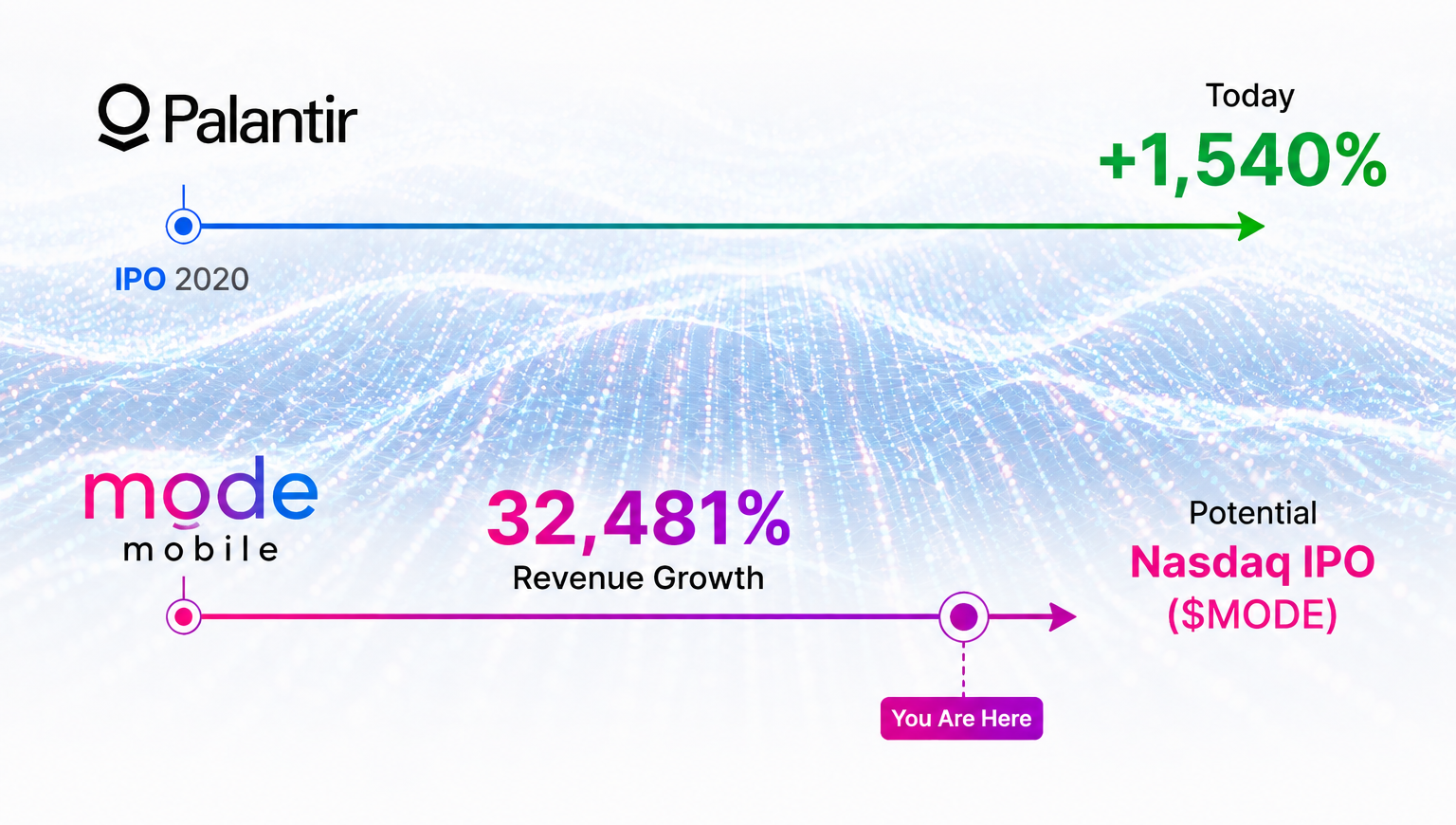
Anyone who invested in Palantir at its IPO in 2020 could be sitting on nearly 1,540% gains right now.
But that great return is already in the past, and the stock is now one of the S&P 500’s most expensive.
And while Palantir was climbing on the back of your public information, another company was redefining big data.
Mode Mobile has already delivered 32,481% revenue growth before even going public.
Mode has:
- 490M+ users
- $1B+ paid to users
- $115M+ in real revenue
- Nasdaq ticker secured for potential IPO
- Pre-IPO shares available for a limited time
Mode’s model pays users for their screen time and turns Big Tech’s free data mining play into a cash-generating engine for everyone.
Palantir now trades at ~85x forward earnings, which means Wall Street has already priced in massive expectations.
But Mode?
Still private.
That means the market hasn’t had its say yet.
Right now, investors can get Mode Mobile shares at early-stage pricing.
When the Nasdaq ticker potentially goes live, that window could close fast.
60,000+ shareholders have already invested over $100M in Mode, and pre-IPO shares are still available at $0.52/share.
But the opportunity to get in on that price closes on August 14.
Palantir’s moment has passed.
Mode’s may just be starting.
⏰ Last chance to invest at $0.52/share – price changes 8/14.
Riot Platforms Just Became a Landlord
Here is a question worth sitting with: if a company’s two largest future revenue commitments involve neither a pickaxe nor a hash rate, what exactly are you buying when you own the stock?
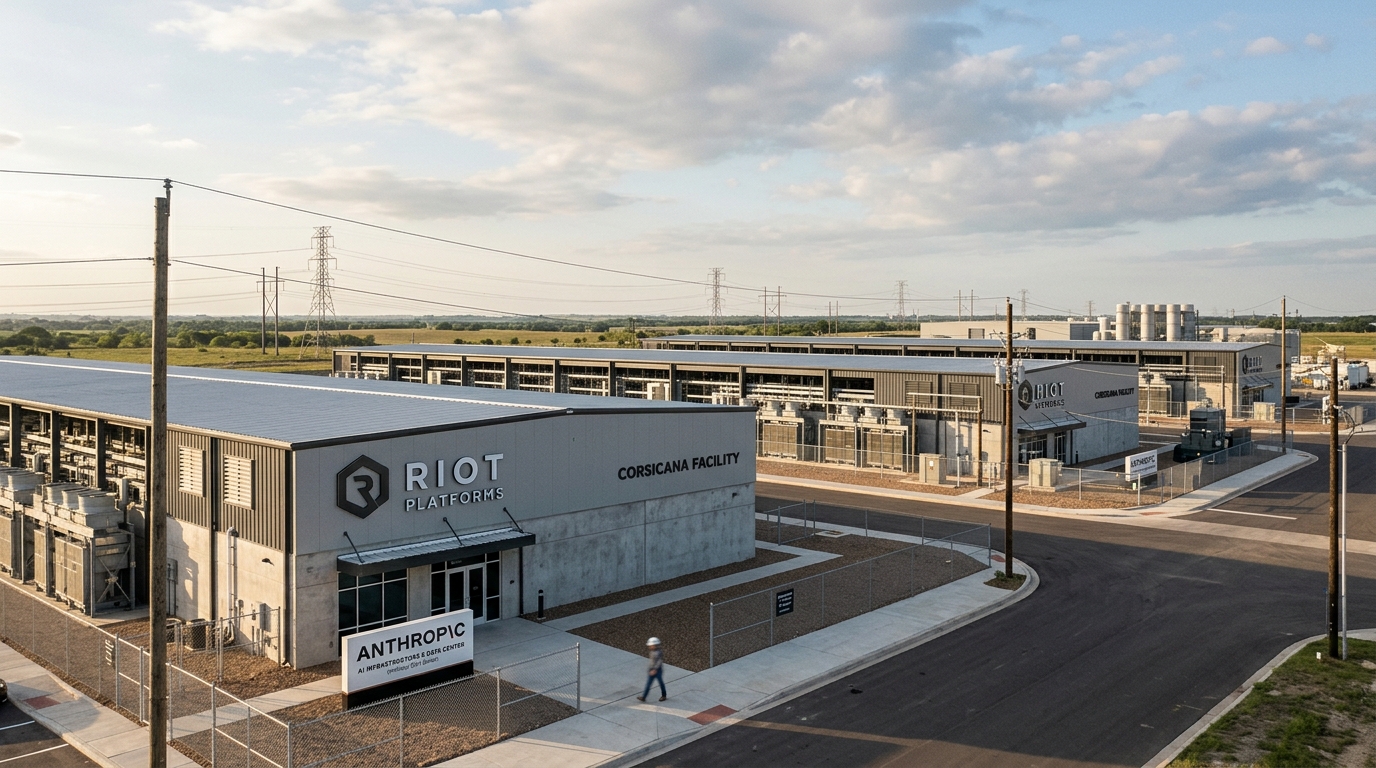
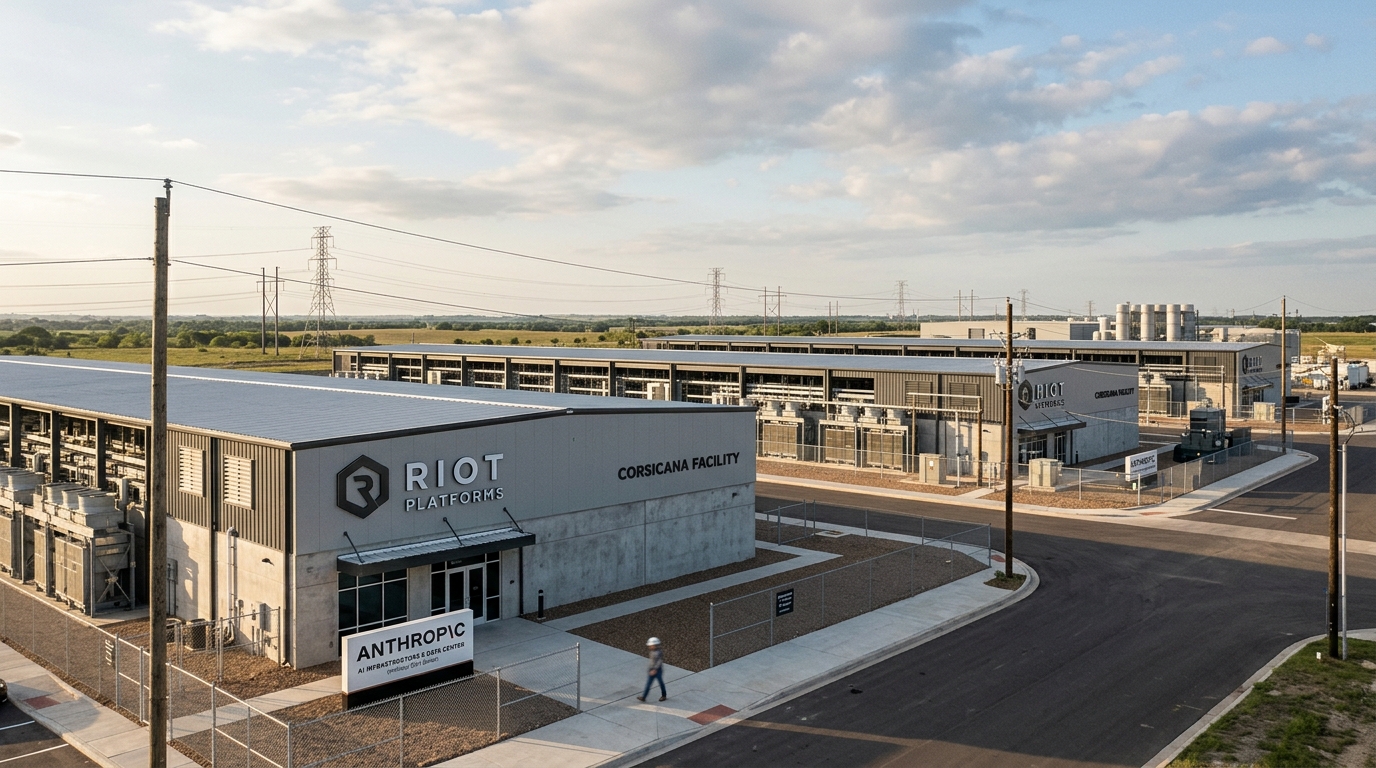
On Monday evening, Bloomberg reported that Anthropic had signed a $9.1 billion agreement with Riot Platforms, a bitcoin miner that has been quietly building AI data center capacity at its Texas campuses. Riot disclosed the deal the same day, describing its counterparty only as a “leading frontier AI lab.” The stock had closed down 5.46% before the announcement, then surged more than 25% in after-hours trading. That move got the headlines. The real investment question is whether Riot has engineered one of the more significant infrastructure pivots in the market right now, and whether Wall Street has any idea what to pay for it.
What the Lease Actually Says
Riot’s Rockdale, Texas, campus will supply 191 megawatts of IT capacity under a 20-year lease running through June 2048. Two five-year extension options could raise the total contract value to $16.1 billion. That is not a vendor agreement. It is a bond-like income stream embedded inside a company still classified by most screeners as a cryptocurrency miner.
Riot plans to bring capacity online in stages, delivering 96 megawatts by December 2027 and completing the full 191-megawatt buildout by June 2028. The construction bill runs $2.1 billion to $2.3 billion. To fund early-phase work, Riot arranged a $573 million interim financing facility through Morgan Stanley, structured to immediately fund long-lead equipment procurement, while the company finalizes a permanent investment-grade credit backstop. CFO Jason Chung said on the Q2 earnings call that the lease was structured with financing in mind from day one, and that the company has multiple paths to attractive long-term terms regardless of how the credit support process concludes.
Riot estimates cumulative net operating income of $7.3 billion to $8.2 billion over the base lease term, implying average annual NOI of $365 million to $411 million. No digital asset miner has approached that figure from a single lease.
The Business Behind the Stock
Combined with the AMD lease signed in January 2026, Riot now has 241 megawatts of contracted critical IT capacity and approximately $9.8 billion of expected revenue under initial contract terms. CEO Jason Les said on Monday that Riot has executed leases with two of the most important companies in the AI ecosystem in just over six months.
The Q2 income statement still reads like a miner’s. Total revenue for the three months ended June 30 came in at $174.2 million, up 14% year over year. Bitcoin mining contributed $113.7 million of that. Data center revenue was $23.2 million, split between $4.9 million in operating lease revenue and $18.3 million in tenant fit-out services. The company posted a GAAP net loss of $237.2 million, or $0.68 per diluted share, driven by over $240 million in non-cash items including a $75 million mark-to-market loss on bitcoin holdings and $98 million in depreciation and amortization. Adjusted EBITDA was a loss of $70 million.
The gap between what that income statement says and what the contracted backlog implies is where the investment debate lives. Traders are clearly focused on the multi-year revenue backlog rather than the current-quarter loss, as 247 Wall St. noted Tuesday morning.
The Rockdale campus itself is the asset most investors underappreciate. It holds 700 megawatts of developed, energized power capacity, with existing fiber and electrical infrastructure that Riot says can be repurposed for high-density computing. The Anthropic deal covers roughly 27% of Rockdale’s total developed power. The rest of the runway is still unleased.
Grid Emergency: 100X More Blackouts by 2030?
The Department of Energy warns blackouts could increase 100 times by 2030. Elon Musk and Sam Altman are already moving “off-grid” – and their next move could reward early investors most.
The Bigger Story: Corsicana
The Anthropic deal grabbed the attention. What surfaced alongside it on Monday’s earnings call deserves more. CEO Jason Les disclosed that Riot had signed a non-binding letter of intent with a single unnamed tenant for the entirety of its Corsicana facility, a 1 gigawatt site in Texas. A binding lease covering the full campus could generate over $1 billion in annual rent once fully deployed, though Les cautioned that negotiations remain subject to uncertainty.
Analysts on the call immediately pressed Les on whether a single tenant for a 1 GW site implied a hyperscaler. He declined to identify the counterparty. What he confirmed is that Riot narrowed from a broad field of prospective tenants to a single LOI counterparty for the entire site, a process that reflects both the quality of the asset and the seriousness of the engagement.
Corsicana is the larger asset. If a binding lease executes here, Riot’s contracted infrastructure would reach a scale that most dedicated data center operators have spent decades assembling. That is not a small conditional.
What’s Driving Anthropic’s Spending
The Riot deal did not arrive in isolation. Anthropic has been securing compute at a pace that makes the $9.1 billion figure look almost routine. The company signed a $10 billion, six-year deal with Volta Infra Holdings for capacity in Norway, and Bloomberg reported in May that Anthropic agreed to purchase nearly $45 billion worth of computing from xAI. The Rockdale lease adds 191 megawatts of Texas-based capacity to a portfolio now spanning multiple continents and technology stacks.
What made Riot an attractive counterparty is precisely what made bitcoin mining valuable for a decade: cheap, large-scale power in proven grid locations with existing interconnection. Starboard Value, one of Riot’s larger shareholders, published a letter to Les in February arguing that Riot’s Texas sites are among the most valuable undeveloped data center assets in the United States, primarily because they carry the one thing that cannot be easily built right now: power connectivity at scale. The Anthropic contract is that argument in binding contract form.
The Risks
Three risks matter most. First, execution. Delivering 96 megawatts of mission-critical AI data center capacity by December 2027 requires construction precision that bitcoin mining never demanded. A delay does not simply miss a milestone; it hands a frontier AI lab a contractual remedy. The $573 million interim facility still needs to be replaced by permanent investment-grade financing. Until that is in place, construction carries financing risk regardless of how confident management sounds on a call.
Second, identity. Bitcoin mining still accounts for the largest share of Riot’s reported revenue, at $113.7 million last quarter versus $23.2 million from data centers. Every megawatt contractually committed to a long-term AI lease is power that cannot be redirected to bitcoin mining if hashprice recovers. Riot is also funding its buildout in part through bitcoin sales: as of Q2, the company had reduced its bitcoin holdings to 11,380 BTC as it sells production to cover the equity portion of construction costs. If bitcoin appreciates sharply, that trade-off becomes more expensive.
Third, Corsicana uncertainty. The LOI is nonbinding. The earnings call transcript makes clear that converting it to a definitive lease requires careful alignment on design, timelines, and delivery specifications for both early and final phases. Investors pricing in a signed Corsicana lease are discounting a real risk.
What Investors Should Watch Next
Four milestones define the next 18 months. The first is whether Riot secures its permanent credit facility for the Rockdale buildout at investment-grade terms that limit equity dilution. The second is the November 2026 delivery of 10 additional AMD megawatts, the first real test of Riot’s data center construction cadence on a live schedule. The third is the Corsicana LOI converting into a definitive lease; Les said Riot expects to update the market in the coming months. The fourth is Anthropic’s spending trajectory. A compute pullback or competitive pressure from OpenAI or Google would change the calculus on long-term lease economics across the sector, not just for Riot.
Bottom Line
Riot announced a deal worth $9.1 billion Monday evening. The market celebrated the number. The more important observation is structural. Riot now has $9.8 billion in contracted AI revenue across 241 megawatts, a $2.1 to $2.3 billion construction commitment ahead of it, and a nonbinding LOI on a 1 GW site that would more than quadruple its contracted capacity if it converts. The income statement will not reflect any of this for another 18 months. The company’s Q2 data center revenue was $23.2 million. The contracted future tells a different story entirely. Investors willing to read past the quarterly loss have a genuinely different picture in front of them than the one being reported.